Showing posts with label NaNoWriMo. Show all posts

24 November 2013

NaNoWriMo draws to a close


It's November 24th, and if you've been doing NaNoWriMo, you're going to be doing either one of two things. On one hand, you might be feverishly typing like crazy to ensure you've got 40k words in order to hit your 50k mark on Saturday, or you might have already sailed past the 40k mark, and you're now cruising towards your goal with days to spare.

No matter which NaNo-er you are, let me congratulate you on getting this far. Whether you've written 10k words, or 50k words, that's still a huge chunk of writing to have committed to paper. True, 50k is now well below the threshold considered a 'novel', but hey, you've possibly just written more in one go than you've ever written before.

I'm sure Saturday still feels like a long way off, but what exactly should you do when you hit 50k?

1) Take a break.
You've earned it. Take a couple of days off writing, and do something totally unrelated. Go to the cinema, visit friends, take in a show - anything you want, just don't write. Racking up 50k words in 30 days can take a lot out of you, so you'll need to recharge your batteries if you're going to survive the onslaught that is Christmas. However, at some point, you'll also need to...

2) Finish your novel.
If it's 'finished' at 50k, then you need to decide if you want to keep it as a novella-length piece, or you want to extend it to 80k or more to hit the 'novel' mark. If you want to extend it, consider sub plots, or padding out those scenes that you probably rushed in order to meet the deadline. If you've finished NaNo at 50k but your book itself is still far from complete, then get the rest written. Take your time - the mad panic is over. But one way or the other, get it done.

3) Edit, edit, edit.
Your book is far from finished - it is a first draft, at best. Even if you've typed 'The End' it's still not ready for the public. Put it to one side for a few weeks, maybe even start something new. Put some distance between yourself and your words, so that when you go back to them, you can critically decide what you need to do with what you've produced. Edit it once, and then edit it again. Find a beta reader, or a critique partner - or better yet, find an editor. If you want to put your book out there, it will need to be perfect if it's going to make it in a crowded marketplace.

Now you've finished reading this, get back to your NaNo effort. Only 10k words to go...

19 November 2012

NaNoWriMo: You get out of it what you put into it


This is the third year that I've been aware of the endurance contest fondly known as NaNoWriMo (or National Novel Writing Month, if you're not into brevity or gibberish) and it's the first of those three years that I'm not participating.

Let me point out that I'm a fan. I'm not sitting out because I don't like it. I'm taking this year off because I'm putting the finishing touches on a book (not a novel) but I plan on participating again next year. I think it's a good exercise in that it helps you develop discipline and find sources of motivation. As a bonus, it's not too shabby for the sake of networking. The breakneck pace guarantees that, in spite of the name, you're not actually going to emerge at the end of 30 days with a fully-crafted, ready-to-publish novel. They tell you that right up front and that's okay. What you do come away with, aside from some level of personal satisfaction for surviving a self-imposed meat-grinder of a schedule, is a giant pile of work product that you can re-visit later, when you have the time to apply nuance, character development, spell check and all the other good stuff needed to produce a novel.

Since I've done it twice, I have two such piles, sitting in folders deep within an external drive. Two great, big, steaming piles of work product, waiting ... on me ... to be shaped into novels. Some day. One of those piles makes a more eloquent case than the other.

"Hey, how about working with me today? I have rich, fleshed-out characters with distinct voices that have stories to tell. In fact, you could probably get an ongoing series of stories out of this. You just need to take time to sit down and come up with a coherent plot and a worthwhile antagonist and finish this off. What do you think? Is today going to be the day?"

I don't say anything as I thumb past, coming across my other pile.

"We got nothin'. My characters are poorly developed and not even particularly interesting, let alone likable. There's no plot to speak of so there isn't even motivation for them to do anything. There are a couple of set pieces that could be turned into something worthwhile but other than that, there's not a lot going on over here. Get to it when you can, I guess. It's not like we're goin' anywhere."

I don't even make eye contact with that pile.

The beauty of NaNoWriMo is there are no penalties. If you come up short on your word count, nobody yells at you. If the end result in terms of work product kind of sucks (and it probably will), there's no harsh critiques. Nobody judges you in any way on any of it. It's like being hired for a tough job with no consequences for failure that you quit after a month and get to keep everything you worked on. It's the perfect combination of the sense of urgency that comes when working against a deadline and not really having to worry about anything. I may never get to either of those massive piles of words but they're there if I need or want them.

Next November, if you've got a germ of an idea that requires you to just sit down and write it already, you could do worse for yourself than running it through the NaNoWriMo process.

16 November 2012

NaDoReMeFaSoLaTeDoNo-NoWriMo


By Molly Field (www.mollyfield.com)

I’m supposed to be writing for NaNoWriMo this month and I have to admit: it’s not going well a’tall.

In fact, this post was supposed to be written a week ago.

The first day, November 1, I was raring to go. Woke up early, felt great, made a vat of coffee, prepared the children for school, came home, put on my woobies, turned on my writerly music, sat down with my mug of half-caf java (sorry Carrie, I’ll take hostages if I drink too much coffee) and long straw which used to be an aquarium tube and immediately got a headache.

I don’t get headaches.

Almost a week went by and I woke with the headaches after going to sleep with them. Last Friday, I went to the doctor’s and diagnosed with a sinus infection. It didn’t present typically with copious output and according to my physician, my “nose [was] clear, but [my] entire head [was] covered in fluid.”

Well, there it is: a fluid-covered,vise-clamped head.

This about sums it up. 

The diagnosis was like permission to allow my realization that I didn’t want to do NaNo this time. It wasn’t about incentive, camaraderie, or initiative. I have plenty of all of those, I just don’t have the interest or the compulsion or ah, hell, who am I kidding… I didn’t have a story this time either.

I sat down and wrote a few things, but they felt forced. They didn’t sound like me and I didn’t like it at all. It wasn’t writer’s block, it was writer’s blech.

My mother People My mother says, “Oh Maally! Relaaaax. It’ll be faaantaaastic, like everrrything yooou do. Yoooou’re your owwwwn worrrrst critik.” And I was. I was a really bad critic. I was so bad, I didn’t show up for the act.

I wrote a couple blog pieces, I enjoyed doing that. What’s funny about that is that at the end of October, I had announced on my vastly and wildly popular blog (really, you should check it out, it’s all the rage) that I was going to dial back on blogging so that I could write more. So what did I do? I didn’t write so I could go back to blogging. Even though I felt like crap but didn’t know it.

Once I’d learned the sinus infection was real and that it had been validated by my doctor, all of a sudden, an intense sharp pain slammed me from the back of my head to between my eyes at the brow bone. My doctor was in mid-sentence when this happened, telling me about the meds and what I had to do and I had raise my “just a minute” finger in her face and sit back, and take it all in. I was overcome.

“Sharp pain? Right now?” She asked and I nodded.

“First time ever in all this time?” she asked, already knowing the answer, to my furtive, micro-nodding upper body. Viselike, my chin was resting on my chest; I had become a clam, a nodding clam.

“I see that a lot, with some people. I see it a lot with moms. You needed validation didn’t you, to be unwell?” I nodded, sniffling now. Not from the pressure, but from the blessed relief of letting the pressure go.

A couple moments of quiet passed between us. I blew my nose, crumpled the tissue until I spoke, “I was one of those kids, who when I’d get in a fight with a schoolmate on the playground or with my brothers or a neighbor, I wouldn’t let them see me cry. I took it and held it all in. But when I got home, and I saw my mom or dad, I cried and howled. I let it out then. When I felt…”

“Safe.” She said. “When you felt safe.”

And I said sniffled ‘yes,’ which sounded like, “Shnesh.” 

So this brings me to my point: forcing is wrong, holding in is wrong and pushing ourselves to do something that isn’t ‘fitting’ is wrong. It’s not that it’s wrong in an ethical or moral sense; it’s simply wrong in a sense that it doesn’t improve things. We explode. But I know this! I wrote about forcing on my blog. 

I need one of these. 


I’m all for writing a book, participating in NaNo when I’m ready to go; when I’ve got something with legs: go forth, write, edit, beg and publish. But if you love to write and you don’t have a clue as to what to write about and your heart’s not in it, then uhh… don’t force it. It’ll be obvious. We writers? Historically we are tortured, brilliant, sad, alcoholic, codependent and tragic people; there are enough of those in the world already... why add 'stupidly masochistic' to the list? Oh, that's right, because it sells.

I might be totally against the writerly establishment when I say all that, but I feel I must clarify: I’m not saying give up, I’m not saying don’t write and I’m not saying don’t push through, even though I sort of am. I’m saying this: write something else. Step away from the laptop. Use a pen and paper. Play Pictionary. Try a poem or a couple of dirty limericks. Take some photos or write in your journal. Don’t let your right brain dry up, just don’t beat it up. When the brain is fertile, the book will grow. 

I have books in my head, for sure. But not NaNo books; I say this at risk of sounding snobby, and it’s not what I mean at all. Rather it’s quite the opposite: my thinking is tragically pedantic: it’s the No in the word that gets me every time. I am not good with fiction (if you read my PPM interview, you’ll see this if this post hasn't convinced you). My every attempt at writing a novel becomes a poorly veiled memoir, sad and dressed in outdated and ill-fitting clothes, clicking on a broken stiletto, and with terribly bad hair despite blatant attempts to prove otherwise.

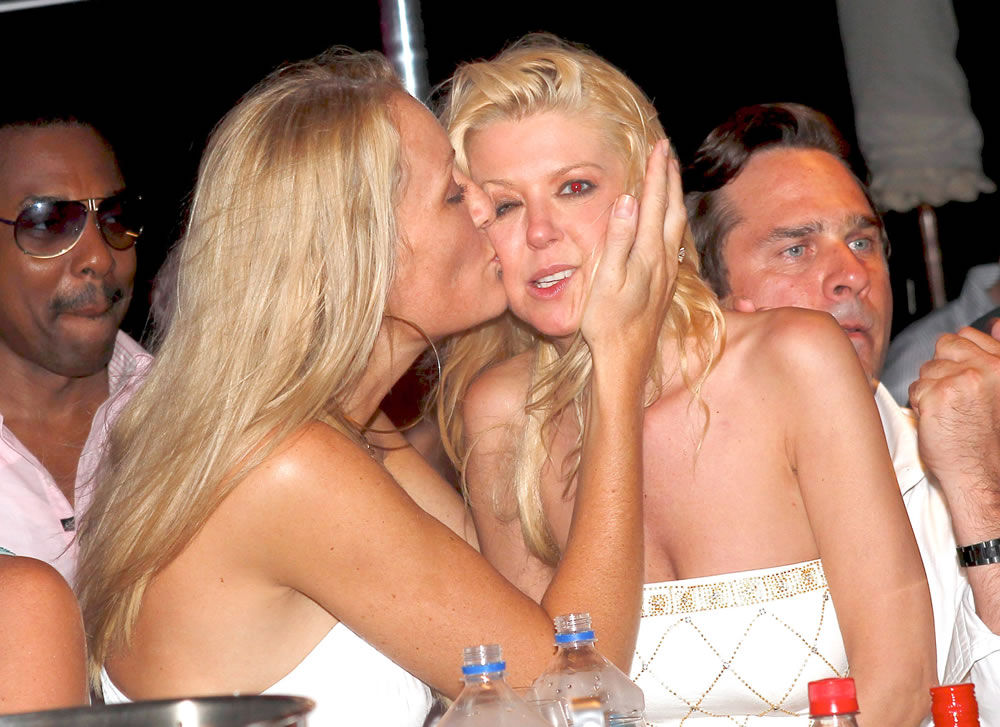
I'm not sure what this picture of Tara Reid has to do with this post other than the fact that it seemed to be the most appropriate for my vision of searching for "drunk but trying to fake sobriety" images. 

Who knows what I’ll do next. I’ve got some ideas in the hopper that if I disguise them well enough no one will ever be the wiser. No one. I’m talking alternate universes, amorphous plasma, vegetative, non-humanoid forms, laser appendages and stuff. But non-humanoid plasma that came from dysfunctional cosmic petri dishes who are dealing with serious behavior issues. That sounds easy enough.

So what about you? Do you force and then when you’re validated by someone else that the forcing is for naught, do you suddenly release? 

17 December 2010

Did I Ever Tell You About the Time I Wrote a Novel in Thirty Days?

Nanowrimo Winner: Writer Carolyn Starkey
by Carolyn Starkey


This is one Nano journey of a young writer...


Before I get into it all, I feel like you should know that I’m the only writer in my house… Actually, I’m the only real reader too, (And by real reader, I mean the one who does it for pleasure, not necessity.) the librarians know me by name before I show them my card, and they know my schedule … Tuesdays and Thursdays.  So when I went to my mother and told her that I was planning on writing fifty-thousand words in the month of November, she was dubious, she told me I was crazy, in her normal loving and caring way. 

I told her that I was going to do it; I knew I could, but she remained doubtful that I would finish, so she still egged me on, encouraged me, and wanted me to beat her expectations.

Yet on the Tuesday of the week before NaNoWriMo, the worst thing imaginable happened! Our only computer in the house crashed, and stayed down for the first six days of NaNoWriMo, and me, being a newbie to the game, didn’t think of writing in a notebook and transferring it to the computer later, so what did I do? I bit my nails, I paced, I sighed, and nervously went over my sketches, a fantasy novel, my first fantasy novel, as well as my first complete novel, about a pair of twins that get stuck inside a fantasy world. I didn’t add to them, I didn’t detract from them, I just read them over and over again, until they were burned in the back of my mind.

Finally, we got our computer back on the fifth, at night, but it was late, and we had just gotten back from a hike, so we all went to bed, and I sat up, anxiously waiting to use the computer.

I didn’t know that the crash was the best thing that happened to my novel, see, I didn’t have the feel for the fantasy novel, I couldn’t connect, so I didn’t start it, and on the way home from the hike, a very, very old song that has always evoked some strong emotions in me came on the radio, Lullaby by Shawn Mullins, the whole song was just so beautiful and it made me think, “What if a girl had a lullaby her mom and dad sang to her every night?” and so, Sunshine was born, and I shoved my old outlines and sketches under my bed, they didn’t exist, the only thing that was in my creative mind was Sunshine and her strange world, her eccentric parents, her colorful friends, and that was it.

To a first timer, at first, NaNo is terrifying, I’m not going to sugarcoat it, the idea of fifty thousand words in thirty days is an extreme challenge, something you would expect trained and seasoned authors to attempt on a game show, even then, you would imagine them sitting on top of telephone poles, tied to their chairs until they reached the 1667 each day. What I didn’t imagine was that I could do it, of course, it wasn’t as extreme as I had imagined, but I found myself pleading with myself when I hit the dreaded middle portion, “If you write another thousand words, you can get lunch,” I would think to myself as I opened up the document. “If you write another two thousand, you can get ice cream!” I would bribe myself as I closed the window with the oh-so-distracting forums. At some points, I was depriving myself of using the restroom, “Write a thousand, Carolyn, you can use the bathroom later.” It wasn’t healthy, but I’m pretty sane other months.* I think one out of twelve isn’t that shabby...
So I worked, and I typed, ignoring all the Nay-Sayers, and watching as my family’s confidence in me rise with my word count goal, it was somewhere around the thirty percent mark that my mother was won over. She was supportive from the beginning, but she was really convinced when I told her how far along I was.

And, while you may think, “She just said NaNo is terrifying! Why would I want to do that?” it is terrifying, at first, when you don’t know what you’re doing, the only way I can describe it is that I went to camp this summer, and I was forty feet up in the air, doing a ropes course, nothing but two ropes and a harness keeping me from falling and probably dying. It was up to me to make sure my ropes were secure, and after I finished the course (Okay, I wimped out, almost puked and did the half-way one, but still.) the only way to get down was to attach myself to another rope on the edge of the giant tree house, sit on the knot of a rope, and go down, like a pendulum, I went full force towards the trees and screamed out of fear, but as I realized I wasn’t going to hit a tree, I let out another scream, not of fear, not of terror, but one of exultation, I had done it, I knew how I was getting down, I knew where I was going, and more importantly, I knew I was safe. The hardest part was over, and I got a pat on the back by a counselor who I had previously been sure hated me.

So do the things you’re scared of, do it as much or as little as you want, but you’ll feel fulfilled and proud once you finish, and it’s worth it to see the screen telling you that you won. Print out your certificate and enjoy your bragging rights, especially when someone tries to tell you about a time they did something that was daring and wonderful, you can just smile at them and say, “Did I ever tell you about the time I wrote an entire novel in thirty days?”

*Others would try to disprove that, but I’m kind of normal… sometimes.

Carolyn Starkey is a homeschooled freelance writer born in Anchorage, Alaska and raised there until she was three, when she and her family traded in the snow of Alaska for the sun of North Carolina, where she is still currently living. She has three siblings, a brother who is an orthodontic assistant, and two sisters who are in college for cosmetology. She is the only writer in her house; she is also the only avid reader.
When Carolyn isn’t writing, she likes to paint miniature birdhouses. 
 
You can see what she’s up to at www.starnovels.webs.com

08 November 2010

NanoWriMo: A Cautionary Tale

by P. J. Kaiser (@pj_kaiser)

I used to thrive under pressure.  I worked many years as a management consultant and I was all about deadlines, timelines, lines at airports and lines at Starbucks.  When I first began writing, in spite of being the primary caregiver for my two young children, I kept the same go-get-‘em attitude. 

If there was a challenge, I accepted it.  If there was a deadline, I met it.  When I first heard about NaNoWriMo last year, my first thought was “That sounds like fun, but I might not have time for that.”  I should’ve trusted my first instinct.  Somewhere along the way, in spite of myself, I signed up for NaNoWriMo and worked on my outline.

Allow me to rewind a bit and tell you that the reason I began writing in the first place is that I have a story to tell.  It is fictional, but is roughly based on the life of a friend of mine.  I saw NaNoWriMo as my chance to dive into the novel and begin the real work of becoming a writer.  Never mind the fact that on a good day, I could only scrape together maybe an hour of writing time without staying up until the wee hours.  Did I mention that I was also taking an intensive writing course at the same time with Stanford Continuing Education? 

If you’re thinking, “This has disaster written all over it,” then you’d be right.  Halfway into the month (after a boatload of some truly golden words), I started to get uber-stressed.  I was staying up late and my daughter was frequently still waking up at night.  But like a bulldog that wouldn’t think of letting go of his favorite bone, I just couldn’t back down.  I figured I only had two more weeks, right?  I won’t go into details, but let’s just say that I “won” the word-count but at great personal cost.  My health suffered and my family life suffered. 

I think if it had been any other project besides “the” novel, then I might have let it go.  But when you’re waist-deep in a project that you’re that passionate about, it’s difficult to take a step back and say, “Pace yourself.  Find a balance.  Don’t burn out.”

Doing NaNoWriMo, for most people, requires sacrifice.  Unless you’re already a regular writer, meaning that you already have a regular writing time scheduled into your day (I mean more than the fifteen minutes that you spend writing over your lunch hour), you need to sacrifice something.  You choose to not watch Dancing With the Stars in order to write.  Or you choose not to go shopping in order to stay at home to write, for example.  These sound like pretty good trade-offs.  If, however, you choose to stay home from work to write, there might be an issue.  If you choose to write instead of eat or sleep, there might be an issue.  If you choose to write instead of spending time with your spouse or children, there might be an issue.  Sacrifices are necessary, but consider what they might be before embarking on NaNoWriMo.  The types of sacrifices necessary and the level of acceptable sacrifice are, of course, different for every individual.

If at any point during the month it seems that the sacrifices are too great, then please have the sense (unlike me) to gracefully bow out.  There is absolutely no penalty for trying and not finishing.  In fact, many people who do not win indicate that they still feel an incredible sense of accomplishment for just having tried.

There are plenty of naysayers out there who would try to dissuade you from writing at all, let alone participating in NaNoWriMo.  If you read this recent article on Salon by Laura Miller you might have felt very disheartened.  Make sure, however, that you read Carolyn Kellogg’s rebuttal in this Los Angeles Times article. 

NaNoWriMo can be an incredible source of camaraderie and inspiration.  It might just give you the nudge necessary to begin a project that’s been lolling around in your brain or to embark on a shiny new project.  If you decide to do it, then I am sending you all the writing pixies that will fit in a Fed Ex envelope – I hope they are enough to see you through to the end of November!

P.J. Kaiser stays at home with her two young children and finds time to write – generally in thirty-second increments.  She writes mostly flash fiction and serial stories in a variety of genres.  Her work has appeared at the “Soft Whispers” site and has been included in anthologies such as “12 Days 2009,” “Best of Friday Flash Volume 1,” the chapbook “Dog Days of Summer 2010 – Not From Here, Are You?”  and, most recently, “50 Stories for Pakistan.”  Earlier this year, she won the February writing challenge at “Write On Online” with her story “Waiting for Spring.”  She can usually be found hanging around at her blog “Inspired by Real Life.”  P.J. is also the co-moderator of “Tuesday Serial,” a weekly collection of links to the latest installments of some of the web’s best online serials.  P.J. lives with her family in Hoboken, New Jersey.


06 November 2010

Winning NaNoWriMo: A Shiny Perspective

by Jessica Rossen

Tell a newbie about NaNo’s 50,000 word goal and eyes widen. That or the person is utterly clueless and just nods. We’ll ignore the latter. Wide Eyes has the right idea. 50k new words on a project is a big undertaking. Sure, a writer can crank out nearly 2k words in a day. The question is, can it be done every day for an entire month? (A month which holds both expected and likely unexpected interruptions, I might add.)

Well, yes. It can be done. It is done every day by some writers, NaNo or no. Does that make hitting the 50k target any less thrilling? Sure doesn’t. Pat yourself on the back, you did it!

But… is that all there is to it?

The answer is a simple “no.” Scratch the surface of NaNo and its 50k pennant and you will find treasures. They don’t sound like bling, but they’re some of the greatest gifts a writer can receive. You only get them if you earn them. One of the best ways to earn them is to do NaNo as well as you can.
You’ll note I said “as well as you can.” For some, that means putting in available time and plugging away at it, but not reaching the 50k. True, not getting the 50k pennant can be disappointing, but there’s a broader picture. By sticking with the project, you learn and develop important skills.

• The discipline to write no matter what. Maybe you had a bad day – a bad week! – at the dayjob and the baby’s teething. You still took what little available time you had and wrote. Did you feel like writing? Probably not. The point is you did it. That’s shiny.

• The understanding you can trust your instincts. For many, habitual second-guessing locks up the ability to write. It’s the equivalent of going deer in the headlights for a writer. Stick with NaNo and learn the perfect word is whichever word comes to you. Type it and keep going. The whole paragraph may change in revisions later, so you know better than to waste time on a single word. That’s shiny.

• The ability to shut down the inner editor and Just Write. This one cannot be underestimated. First drafts are meant to be ugly: Just. Write. Get what you know of the story out onto the page or into pixels. When it’s time for revisions, you’ll have the plotline as a whole in better perspective. That’s really shiny.

There are more treasures to be found within the NaNo world. Everyone experiences it differently. You’ll learn the lessons you most need. Even better, you’ll get the opportunity to pass that learning on to others. I come back each year to reinforce these lessons as well as have fun writing. I urge you to keep your mind wide open to the possibilities.

That, dear wrimo, is the Spirit of NaNo.

05 November 2010

Ten Tips for Nanowrimo

by Leona Bushman

The NaNoWriMo craze is in full swing. People not involved with it are probably sick to death hearing about it. Nevertheless, we who are embarking on this insanity, push on in our endeavor, ignoring the whines of those who have to listen to us as we gear up for the frenzy. Last year, my first NaNoWriMo, was exceedingly good for me. I learned new things and had fun. I highly recommend it. It helps get a manuscript off the ground.

A few rules to remember:

1) Turn off your inner editor. I know. Sucks. Make notes. Word commenter system worked wonders for me (one of the things I learned last year).

2) Breathe. This may seem obvious, but think of the stress created under pressure. This is the worst kind of pressure-the pressure to create. An intimate act that you hope will eventually be printed by strangers and loved the world over. Or, at least by enough people to keep you in ink and Pepsi. (Uh, no Pepsi doesn't pay me for product placement. I live on the Rez. Yes, in this case that stereotype* holds true).

3) Find a rhythm. A pattern. Whatever your pattern is. It helps me to twitter/blog to get my brain going. It gives my kids a chance to remember all that, "Oh yeah mom, I forgot to tell you stuff," and "I'm hungry," whines, and get it all out of the way. Then, when writing is underway, I can say with total assurance, I took care of this or that. That was my pattern. It helped. You may need to stay off the internet to ensure you don't waste time playing. Use it as a reward. You know yourself. If you don't, you still have a few days left to figure it out.

4) Quit freaking out about the word goal. It's not really particularly high. You may need to push yourself out of that comfort zone you've been in, but just do it. (Nike's not paying me either. Maybe I should apply?)

5) Make your daily word count based on weekdays. That does two things. One, you have two days off if you succeed and you can look forward to that. It allows for birthday parties, school functions, whatever you need those two days for. Two, it gives you those days to make up something you missed because you got a flat tire on the way to a write-in or your kids' teacher calls and wanted to know why they thought Duct tape was an awesome disciplinary tool.

6) Prep meals and TREATS ahead of time as much as possible. Freeze cookie dough, muffins, whatever it is that you and your family like. They will feel less like you've abandoned them. I wasn't prepared last year, so the first week sucked, but I'm a quick learner. I spent one day prepping as many meals as I could for the next week. That included grocery shopping, and portioning out things in preparation. Last year was a real challenge because I had no oven or microwave-stove top only. A gas stove top. I'd never used a gas stovetop before.

7) If you are having problems with the plot, or a chapter, write what you want to happen. I did this and before I knew it, I was writing again to the story. Granted, I had to edit out things later, but it kept my word count going and my stress level stopping. (Can you keep something stopping??? LOL)

8) Let no bad happen. If you can help it. I don't mean in your story. If you are writing horror. Write things as bad as you like. I mean, don't over stress the little things. Further, farther? OMG which is it? My story will suck now because I can't remember. Worst, worse? Everyone will think I'm an idiot. Okay, get the picture? QUIT IT. When this is over, I will steal a few wonderful language sites from edittorrent's grammar site and post them here so that you can fix it-LATER.

9) Keep networking. Keep talking to those people who have been your support all this time. It will relieve stress, give you companionship, and keep it all in good fun, which leads to my last rule.

10) Have fun. We're writers. Writing is fun. Yes it's hard work. Yes, it can tear us apart emotionally when things aren't loved by everybody and their dog PB. But over the top, it's fun. Why else would we do it? Half the time we are fighting stereotyping (that's not a REAL job & You're not Published? then you're not a REAL writer) and our families to buy the time we need. Not to mention jobs, illness, life's foibles. Why not have fun?

You can follow me and my crazy journey with fellow writers on twitter by looking up Leona Bushman.

* For more on Native American stereotypes in literature and how to avoid them read "The Chief Silver Eagle Litmus Test for Writers."


30 October 2010

Need bite-size pieces to tackle NaNoWriMo? Approach it as 30 days of freelance assignments

By Shelia Watson

It’s that time of year again. No, not the holidays with all the eating and buying and merry-making. It’s time for that 30-day word-blitz known as National Novel Writing Month, also known as (because there’s no time to waste!) NaNoWriMo.

Which means it’s also time to face the daunting task of producing the first draft of a 50,000-word novel in 30 days.

This is my third shot at NaNoWriMo, and I am confident that third time will be a charm. Or at least not daunting. You see, in preparing for this year’s blitz, I had an insight into how to approach NaNoWriMo so I could sustain the momentum.

In years past, trying to accomplish a long-term project like a novel in a mere 30 days defeated me almost before I started. It was just too much to bite off and chew. I am a freelance writer, and my usual gigs are articles ranging from 500 to 2,500 words. And even though sometimes my workload requires completing several in one day, the short-term projects are manageable for me.

Then it hit me: The average number of words I write on any given day is more than the daily word count for NaNoWriMo. I can do this.

And so can you – all of you freelance writers out there, both working and wannabe! Remember, though, it’s more than just cranking out a certain number of words per day. You have to get into the same mindset that fuels a professional freelancer to deliver. Such as:

Be accountable. As a freelancer, you take on an assignment and you contract (in either verbal or, preferably, written form) to get it done. Your professional relationship depends on getting it done, so you take it seriously. You plant your ass in a chair and be a professional and do it. Same with this 30-day workflow. In its purest form, NaNoWriMo is an accountability technique, with communities all over the country and several websites with reminders to stay on course. If you signed up, keep your promises and do it.

Stay on message. The story/article/booklet/whatever that you’re freelancing has a particular message and audience. You may want to veer off into an impassioned editorial, but if you’re reporting, better stick to the objective five Ws. Or if you’re putting together a technical manual, now’s not the time to work the cultivated prose. This rule applies to NaNoWriMo as well: Stick to the story, follow your outline (assuming you did one, and I hope you did), and resist the urge to go off on tangents. Remember: The point is to get it done.

Engage the writer, ditch the editor. There’s a time for everything, and everything has its time. This is no exception. As a freelance reporter, I sometimes have several stories due at once. The only way I can get them filed on time is to get it all out of my head – the interviews, the research, the data – and then go back and massage the copy into the stories. If I agonized over every paragraph as I wrote them, I’d miss deadline. NaNoWriMo is similar in that there is a time to write and a time to edit and a time to polish. November is writing time. Take to heart the words of a wise Internet pundit: “You can’t edit a blank page.” The purpose is to write, write, write. Politely tell the editor to get lost, and remember that no one is going to read this first draft except you. Give yourself permission to write shit, and get on with it.

Keep a schedule. Being organized is key for professionals. My system is fairly simple. I write assignments on post-it notes and put them on the dates on a huge wall calendar. (I use post-its because I can easily move them to another date if the deadline moves, and taking them off the calendar is a psychological reward.) With NaNoWriMo, filling up the calendar is important too. Block out part of every day for writing, and have an outline. Knowing what you’re going to do every day will save time you’d otherwise spend going over the plot.

Do what works for you. The beauty of freelancing is that it can be adjusted to the individual. Find your peak performance time and hit it: Some people write in the morning, some later in the day, some late at night. You can write anywhere, and you can choose to write longhand or take your computer on the road. As long as you stay within the guidelines – meeting those deadlines and keeping commitments! – it’s a flexible life. NaNoWriMo can be adjusted to meet your needs too. If it helps to say a prayer or chant mantras before you start, do it. If you need to do stretches or yoga or dance, have at it. If you need the camaraderie, meet with your local group; if you need solitude, closet yourself off from the world.

Enjoy the ride. Don’t forget to have fun. Yes, freelancing is hard work, but focusing on the sheer joy of putting words together and fashioning them into something entertaining, enlightening or educational can make it awesome. In similar fashion, have fun with NaNoWriMo. Remind yourself daily how much you love writing. Revel in it.


Shelia Watson is a screenwriter, freelance writer/editor, book author, wine aficionado and chocolate lover. She lives, works and hoards chocolate in the teeming metropolis of Charleston, S.C. You can reach her at swatson@tidalcreekproductions.com or on Twitter @scriptsnthings.

07 June 2010

A Month of Writing: SocNoc

by Carrie Bailey

My personal quest for a "Nanowrimo: Part Two" brought me to New Zealand.  Kiwi Writers celebrate their winter with SocNoc, a 50,000 word writing challenge much as those in the Northern Hemisphere band together for Nanowrimo.  And guess what?  It's not so exclusive that they wouldn't let me, an Oregonian, sign up!

On one condition: I needed to know where New Zealand was located.  Fortunately, Oregon has sheep.  Naturally, that increased the likelihood of me meeting kiwis.  Connect the dots between those two seemingly unrelated facts by reading the wikipedia article on New Zealand and Oregon.

I already knew where New Zealand was and that's an unfair advantage as a product of the American educational system.  No, I mean it.  Say what you will, but I graduated high school and attended college with a girl who didn't know that our state capital was north.  So my for my tribute to the NZ month of writing, I decided to take it one step further and make sure everybody else knows where they're writing, too:


View SocNoc in a larger map
New Zealand is next to Australia.

That's right.  Even if you were passing love notes in 8th grade geography and never once asked yourself, "What country brought us the majestic scenery in the Lord of the Rings films?" you now know.   For a balanced opinion on the country read "Why New Zealand is a Lifestyle Superpower" from the BBC this May.     

SoCNoC offered two important options in their challenge that met my needs this year.  As I still struggle to form literature from the literary scramble that was my Nanowrimo novel of the past November, I've found an ally in the 25,000 word challenge where revising counts in HaFNoC at:


And it wouldn't be fair for me to bask in the SoCNoC motivational process without sharing at least one NZ writer's blog Writer's Block NZ, where the bloggist shares a very introspective journal style approach to chronicling the writing process.

So, here's to SoCNoC!  Thanks for allowing my summer to feel just like my winter!

29 January 2010

NaNoWriMo: Rookie Mistakes

Al_HikesAZGive the Lady a Ride was the result of my failed 2007 NaNo attempt. Want to know why I failed? I got so excited about my subject, I wanted to research it. So I did. Trust me, that amount of time not writing is guaranteed failure in a contest where word count is everything.


Instead of competing in NaNo, I interviewed a former bull rider, visited a rodeo ranch, watched calves being tested for the bucking abilities, studied tapes of bull riding, attended a cattle auction and interviewed the ranchers, cowboys and auction workers on the scene. I did a lot of foot work, and I'm proud of the authenticity it gives my novel.


There's only one problem: I wanted to include absolutely everything I had learned in my book. You've heard of information dumps? Well, I'm guilty of a research dump. I found the world of ranching and bull riding to be fascinating and didn't want to leave out a single detail for my readers. In doing so, I lost sight of the plot. Give the Lady a Ride is a romance. The plot, dictated by the genre, is: Boy meets girl. Boy loses girl. Boy gets girl back.


In her letter rejecting my submission, the editor of White Rose Publishing actually counted how many times my main characters shared a scene in the five chapters I sent to her, and the result was not pretty. It's cool that she read all five chapters and took the time to respond, but the point is: Ride is a romance, not a college course on bull riding or ranch management.


I needed to weave my research into the story just enough to create the authenticityI was seeking, to give the reader a feel for the setting, the life, the activity. Don't get me wrong--the research was vital. I'm not saying cut corners doing it. I'm saying it's not necessary to write into your manuscript, in detail, everything you've learned.


I went back this past weekend and axed twenty-seven pages worth of research dump. The pages read well. The characters were active and engaged. Tension and conflict and all the wonderful stuff that makes a good novel better flowed through the scenes. What they lacked was a point. What they failed to do was to move the characters forward. I took out all those pages without affecting the story. The reader will never miss them. Heck, I don't miss them!


*Flickr photo, "Bustin' Out of the Chute" by Al_HikesAZ

23 November 2009

Adrenaline

by Morgan Barnhart

As writers, there are few times when we get to feel the adrenaline kick in. Let's face it, sitting in front of the computer screen/note pad isn't life threatening. Unless the computer decides to short circuit or your pencil breaks and the lead flies into your eye, or heaven forbid you get a paper cut, those things hurt!

My point is, when a deadline is approaching, I become my strongest. Of course it's better to play it safe and just write as many words a day as needed or get it done early so you don't have to worry about it later, but where's the fun in that?

For example, it's the end of November and my NaNo is only at about 10,000 words. That's pretty pathetic considering I only have eight days left to get to 50,000 words. I've won NaNo in many different ways, but the way that has been most effective, year after year, has been when I'm down to the last few days of the month and I need to kick out 30,000 words. A bag full of sugar to my left, coffee to my right and iTunes geared up; I'm ready to kick some novel butt.

Nothing can top that kind of rush.

While some may argue that writing under that kind of "stress" causes your writing to falter since you just write down whatever is on your mind whether it has to do with the story or not, I beg to differ. Writing under that kind of pressure releases new ideas in which you never would have thought of under a calm mind set.

This technique may not work for everyone considering everyone handles pressure in different ways. You also have to be disciplined enough to actually push yourself to that limit and get the writing done no matter the cost.

So let's get that adrenaline pumping!

06 November 2009

NaNoWriMo: Lessons from 10k words


by Carrie Bailey

When you commit yourself to a goal, any goal, you will face some opposition though the form it takes may come as a surprise.  The solutions must be as creative as the endeavor itself if the person is to be successful.  My objective: I will write a 50k word novel for NaNoWriMo by the end of the month.      
My opposition came in the form of an angry roommate with a valid complaint and some serious boundary issues.  After a short battle over respectful communication styles and a day spent nursing my wounds in the company of friends, I lost my momentum for my novel.
Personal conflicts can always be overcome through respect and cooperation, but they can drain your energy and cause you to lose focus.  Now, I don’t hate my roommate and I won’t start World War III in my kitchen, but I won’t submit to tyranny either.
My solution:  write through it.  I skipped to a section in the novel where an uptight academic played the role of the villain.  I channeled my frustration into this character.  In the end, I had 1000 more words and a good laugh at myself.
The fictional version of my nemesis was precisely what it should be, fictional.  And the source of my inspiration was in reality a stressed out guy bombarding me with apology notes.

04 November 2009

Nay-Sayers

by Morgan Barnhart

NaNo has been a very important part of my life over the past four years. It is such an accomplishment to write 50,000 words in 30 days. There have been several people who are nay-sayers about NaNo, they don't understand WHY writers would need to do NaNo and what the point is. In fact, here are the two most asked questions and my answers:

Q: "What is the point of NaNo?"
A: "It's to prove to ourselves as writers that writing 50,000 words in 30 days isn't such a big feat after all."

Q: "So...what do you win when you get to 50,000 words?"
A: "The satisfaction that you wrote 50,000 words in 30 days."

And their response to both of the above answers: "I don't get it. You don't have to prove to yourself that you can write, you just write! And uh, if you don't get any prize for winning then what's the point?"

How sad their life must be without challenges to better what they love to do in life. The better question is, why does NaNo only happen once a year?

There are other off-shoots of NaNo across the web, including a year long word count goal where you write somewhere around 360,000 words in a year. Though with that one, you can write a couple novels, you don't have to stick to the same novel.

The nay-sayers will never understand because they don't understand the thrill you get once you're finished with your novel. The surge of energy, excitement and sense of accomplishment. 50,000 words in a month is almost unheard of by any normal author! Come on, people, don't you see the challenge?!

Forget the nay-sayers and enjoy the challenge of NaNo! Write those 50,000 words, jump for joy when you finish and shove your novel in those nay-sayers faces! Hah!

03 November 2009

Writing Buddies

by Carrie Bailey

Today is the third day of NaNoWriMo or National Novel Writing Month. The challenge: write a 50,000 word novel in 30 days. The writers: well, they must be crazy, right? This is my first year of participation. I have a few buddies signed up and I’ve started pounding away at the keyboard.

Thanks to a bout with the flu that has kept me bedridden for two days, I’ve written 7,000 completely unedited words. Although I wouldn’t say my Dayquil inspired ramblings are my best work yet, I have learned something in these early days.

Companionship is the writer’s secret weapon. Whether through the people I know from work or through social media, I’m a better writer for hearing their advice. There’s a stereotype of a writer as a recluse. It’s easy to believe it when you consider that writing requires hours spent alone. Yet, the writing is a venture in communication.

Whoever you write for or write with, you grow from those connections. I find that NaNoWriMo has done something to motivate me like nothing else could. I must write this month. I must finish a novel or I’ll suffer an unthinkable fate.

I don’t know exactly what that fate is, but I’m sure it’s there and I’m motivated to avoid it. I’ve committed myself to sharing my work at the end of the month. That commitment and the buddies I’ve signed up to support and encourage keep me writing.

So, come hell or high water, I’ll be holding a novel in my sore keystroke damaged fingers before the next moon cycle. What a thought! Thanks writing buddies!

30 October 2009

Preparations for NaNo 2009

by Carrie Bailey

My first year for National Novel Writing Month starts in two days.  I have my checklist all prepared and I am ready the 30 day novel writing frenzy.
  1. Signed Up 
  2. Writing Buddies
  3. Coffee 
  4. Computer 
  5. Back up supply of coffee 

Barriers to writing exist in less suspected areas as well.  A full schedule can conflict with writing projects.  In order to write, I have to make writing a priority and that is no easy feat for anyone supporting a family or getting established.  After I assessed my regular schedule, I decided to sacrifice time in two areas: social media and movies.  I can only hope that my friends and loved ones will forgive my hiatus from Facebook and IM. Writing unpaid should replace other recreational activities if it is a priority.

Exercise and face to face socializing shouldn’t compete with time spent on writing projects.  Breathing, eating, and sleeping are also important activities that add to a person’s ability to produce spectacular written work.  Should a writer stretch before they start pounding away at the keys?  Yes.

Other good advice I’ve gleaned from the veterans:
Have snacks ready and near your writing space. 
Keep your plot loose and don’t plan anything that requires research.

Best of Luck to everyone getting started! 

23 October 2009

National Novel Writing Month 2009


November is National Novel Writing Month or NaNoWriMo.  This will be my first year as a participant and I’m excited, because everyone else is excited and I don’t know why yet, but I can’t wait to find out.  Here’s the website for details: http://www.nanowrimo.org/
“Valuing enthusiasm and perseverance over painstaking craft, NaNoWriMo is a novel-writing program for everyone who has thought fleetingly about writing a novel but has been scared away by the time and effort involved.”
The objective is to write a 175 page novel or 50,000 words between November 1rst and November 30th.  They emphasize quantity over quality in the spirit of sheer fun.  In 2008, NaNoWriMo had 119,301 participants and 21,683 winners.  A little background:
Founded by: Freelance writer Chris Baty and 20 other overcaffeinated yahoos in 1999.
Now run by: The Office of Letters and Light, an august 501(c)(3) nonprofit based in Oakland.
In my opinion, over-caffeination is genius, so NaNoWriMo must be, too.  They have a Young Writer’s program and on November 22 a Write-a-thon Fundraiser in San Francisco.  It’s a “night of writing dangerously”…
Many reasons exist for a writer to participate, but I’m asking myself, “Do I need a reason?”