Showing posts with label Genre. Show all posts

14 June 2013

Building Your Reader Army


I'm yet to be published, and I have yet to finish a book so feel free to judge my opinions accordingly. However, (and this is a fairly big However) I have spent a couple dozen years or so studying consumer habits in my sales, media and marketing lives, and I'm a heavy media consumer myself. Okay, disclaimer done.
Me: Circa 1987

Even though I'm inexperienced on the publishing side of the media community, I have a TON of experience working with consumers and I'm willing to bet that experience is going to help my book sales.

You know, once I actually have something to sell.

Who's Your Community?

Do you talk to writers or readers? Who's more likely to read (and buy) your books? Writers are pretty busy, you know, writing. Sure, they read a little to keep their skills sharp, but if you want to find people that buy books, you want to find readers.

When you first joined social media to build your writing career--

(You are on social media, right? Facebook, Twitter, etc.? If not, go sign up for Twitter at least. It's simple. I'll wait. So how about that crazy weather, huh? Are you watching the Stanley Cup? That triple overtime game was wild! I sure hope the Hawks can pull it out, but that Boston defense is wicked.)

Oh, you're back. It was easy, right? Now that everyone's getting social, let me give you a tip to think about when interacting with other people on social media. Following writers is great for learning. Following READERS is best for EARNING. 

Pretty catchy, eh?

When I first decided "I'm going to be a writer" a few years back, I immediately ran to Twitter and started following writers. It was fun. I actually had writers following me back, including Sideways author and frequent follow-backer Rex Pickett, so that was a thrill. These experienced authors were sharing knowledge, giving tips, and most importantly, proving that writers are everyday people too. In fact, following writers is what connected me with Peevish Penman so it was most definitely a strong strategy.

But times they will be a changin'. When that first book hits shelves and/or Kindles, I need to expand my community so I'm not just talking to writers all day. I need to start talking to readers. I need to find those Tweeters and Facebookers who list reading as their number one pastime. These are the people that will seek me out and at the very least read my Kindle samples to decide if they should plunk down some dough and help put food on my kid's plate. They're readers. That's what they do.

Not big on social media? Then hit the streets! Go places where readers are. Jody already gave us a great strategy for book-signings, but there are other places readers gather. Talk to your local librarian and ask about special events where you might be able to mingle with local readers. Find trade shows and festivals where your book may be well-received and get a booth if not too cost-prohibitive. That's why I prefer social media, because it's FREE, but if you want a more personal approach, feel free to open up the wallet and get your meet-and-greet on.

Shifting your focus to readers is step one. Now let's take a deeper dive.

Find Your People!

Once you've found readers, you have to find YOUR readers. This part might get tricky, especially if you entered this career expecting to write books for the entire world. Time to admit an uncomfortable truth. Not everyone is going to dig your work. At least, not right away. I'll talk more about shifting customer bases later but for now, you just need to determine YOUR people. 

If you're writing general fiction, this may not be that easy, but if you're doing genre-specific stuff, there are any number of book clubs, internet forums, facebook groups, etc. that would be ecstatic to have an actual author of the genre they love interact with them. Use these groups to create connections and build a rabid reader base. They'll tell similar-thinking friends and you will start to grow your army.

This can happen for non-genre writing too, but the process seems to be much more hit-and-miss. One person who loves your work won't necessarily have friends and family who will be so readily convertible. It just means you'll have to talk to more people to find your groove, but it's out there somewhere.

Welcome Others

Braaaaaaaaains!
Building your army can be tough, and to make it even tougher, readers are constantly evolving. Ten years ago, nobody was reading zombie books except for a small devoted fan base. Now, everybody is crazy about zombies. 

Unfortunately, the authors who are really making money on zombie fiction began writing it before it really took off, and outright luck often comes into play when finding these new fans, but this is a good thing. It means there's always a chance the the stuff you love to write (and probably what you do best) is going to catch on with the general public and make your books extremely profitable. Don't ever underestimate the chances of making new fans. It can happen in an instant.

But this is not how you should measure your success. These happenstance tag-alongs will not be a given so don't start mansion shopping, but if it happens to you, just enjoy the ride because it appears to be a fun one.

Marketing your work (and yourself) can, and should, be an enjoyable experience. All you need is a solid strategy, a little persistence (read: a crapload of persistence), and an undying love for what you do. You're a writer. They're your readers. Now go find them!
10 December 2012

End of The Year: Decide! Execute! Finish! ... Start?


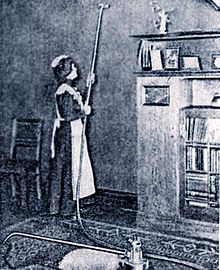
The cleaning ladies are here. Which means I can't really think because they're being generally awesome and vacuuming my lair.

No matter, we will press ahead and see how this post turns out, right? Steady on your horses, friends, there's unknown territory ahead. 


I am having an issue (God, that vacuum is reeeeeally loud, I think it's got a Lego loaf or my kid's Millennium Falcon in its rotors) with perspective and point of view in the book that I have decided to go back to writing. This decision is almost a 180˚ (I'd like to think of it more as a 168.5˚) turn from my previous stance of believing that all my written works must be authentic, real and not fiction. Well, if politicians can lie (the vacuum is right behind me now, the floor is humming and this is hard to write) so can I; I can lie too. 

My former boss, and current friend, Liam Callanan, wrote a book, All Saints, from the point of view as a former teacher (I almost wrote 'former female nun,' now that would've cranked up some editors' eyebrows now wouldn't it've? How many more times can I say 'now' in the same sentence? And 'it've'?? Who talks like that?!) at a beachfront Catholic school. It was a brilliant book and I absolutely loved it. And Liam's a man; always has been. He was never a former female or a nun, so I've got room here, to y'know, do what I want. 

The problem is: the first, oh, 75,000 words all of this book I'm going to get back to very soon (and I'm not saying 'real soon' as if I mean 'oh, y'know after I win the lottery and build my parents a ficus tree terrarium made of sapphires...' 'cause I've already said that) are all written in 3rd person narrative, interrupted at times with 1st person thoughts and observations from the protagonist. I swear I've seen this whole 1st person interruptus done before... where was it? ... Oh, yes, I don't recall never. So, maybe because I've not taken a writing class since college (that was last year, I'm 23 - FIRST LIE! hooyeah, this feels good!) it's not the best technique? But this is the 21st century, baby... it's all good. Recreational use of pot is legal in two states now.

I've got this. 

Not really. 

What I do 'got' is 195 pages of perhaps the wrong perspective. I say 'wrong' because I'm finally OK with writing this book as a mostly fictionalized memoir  (is 'fictionalized memoir' even a genre? Did I just create a new genre? Well... this is the age of do whatever you want) and if I really want to be authentic, I could just crank it out as a book from me about me by me for both of me. What to do... what to do...? I have plans...

I plan to get back to the book within a few days to get a jump on the new year. I'm waiting until 12/12/12 ends so that my efforts won't be a complete waste of time if the Mayans are right about that end of the world thing. Oh, you can joke all you want... but isn't just one teensy bit of you curious if they're right?


I think they're wrong: I have Egg Nog that is good until 12/12/12 (but look at the time stamp... that's hedging it awfully close, don't you think?) next to whole milk which just y'know, GOES for it and doesn't expire until the 17th. That whole milk has cojones; it knows who it is.

This is what the end of the year world year thing does to me. I'm not big on the hype of New Year's resolutions, so I think I'm beating myself to the punch and causing as much angst about the whole thing before I even get started. I need to be like that whole milk: just go for it. 

Readers: what do you think about in terms of reading a book from its point of view? Do you like to hear from "me" or from "him" or "she" or ... "thems"? (Jusssst checking to see if you're still with me.) 

A couple friends have vocally stated they prefer 1st person and I see their point: they feel it's more relatable, more intimate and they get sucked in (like a vacuum). But then there's this part of me that says, 'No, write as a detached observer'; but then I'm nervous that the whole thing I've got going on with my character's thoughts and observations is like a giant vacuum in the room: distracting, loud, fantastical, awesome and hot...


I'm re-reading Life of Pi right now and I find the whole experience -- from the author's notes in the beginning to the entire structure of the book -- to be slightly off-putting in that it's so in-your-face fiction. All of it: I'm caught in that familiar, yet ancient place from "The Wizard of Oz" - where Dorothy wakes up and the child in me believes what she did: that she went on a yellow brick road with a talking lion and living tin man and scare crow to see a floating head, aw c'mon... who am I kidding?; and the adult in me believes what the adults did: that she was smokin' crack. It was Judy Garland... 

But when it first came out, I loved Life of Pi. So the problem is me. I need to stop being such a realist. I love fiction. I think my problem... is guilt. More of that next time. Maybe.  


17 September 2010

Professional Manuscript Assessors: Part Two

continued from yesterday Thursday, September 16, 2010 by JJ McConnanchie

Genre is an important element to consider when placing your work in the hands of a professional.  When choosing an agent, you wouldn’t look for someone to rep you if you write fantasy and they only rep romance novels  Think similarly when choosing someone to assess your work.  If writing for young adults, find someone with experience in the young adult market.  If you write historical romances, look for someone who writes historical romances, or has edited a few, or at least someone enjoys reading them.  Steven Roy, author of the soon to be published THE STRANGELANDER, is sceptical of manuscript assessors, but agrees that if you are going to choose someone, “you’ll need someone who has [current] experience in the genre market.”  It is important that the person you choose is on the same page as you.  Otherwise their opinion of your work could be skewed – in the wrong direction.

Where your assessor is based (local or international) is also worth considering.  I live in New Zealand and I looked at getting my manuscript assessed by someone here.  Eventually I decided against specifically looking for a New Zealander.  Firstly, it’s about five times more expensive, but most importantly it is because I am not writing a New Zealand-centric novel.  If I was, picking someone from New Zealand would have become important, but in my case I did not feel that it was necessary for this particular manuscript.  You must find the person who can contribute the most to your writing, no matter where they are in the world.

Prices for manuscript assessments vary wildly (anywhere from 200 USD to 1000 USD and up), but price isn’t always important.  Lee Pletzers, urban fantasy/horror writer of novels including THE LAST CHURCH and THE GAME says of an assessor he is currently working with, “what she has found and her recommendations are worth more than what I paid.”  However you still want to make sure you are getting your money’s worth.  Find out what your assessment will entail.  What length of assessment will you get?  Will you have the chance for a follow up discussion?  Some assessors include a light edit for the price.  Do your research and work out exactly what you are paying for to avoid any disappointment.

Mary McCallum, manuscript assessor and author of 2008 Montana NZ Book Award (Best First Book of Prose and Reader’s Choice) winner, THE BLUE, says, “an unpublished writer owes it him or herself to get a practiced eye over it before putting it out there – that way he or she knows it is some of the best work they can do.”  Of course, a professional assessment isn’t guaranteed to get you an agent, or to turn your book into a masterpiece.  She also says, “Some books sink out there, some swim, some fly to the moon and back”, arguing that even if you do get a publisher, that does not mean it will succeed once it is out in the competitive book world.

Regardless of how your book is received, if it does find its way into the wide world, as a writer we all want our work to be the best it can be.  If you do your research and find the right person, a professional assessor could help you improve your writing, your manuscript and perhaps lead you one step closer towards the goal of publication.  But no guarantees.

JJ McConnachie discovered writing about 2 years ago when she realized her musical talent was limited to jamming a few songs on a guitar and decided to leave it that way.  JJ has been an incredible supporter of Peevish Penman and is hands down one the best writer buddies to know online.  She invites writers to connect three ways: 


Tweet me: @WritersBlockNZ
Stalk me: http://writersblocknz.weebly.com/
Read me: http://writersblocknz.weebly.com/blog.html

28 June 2010

What’s your genre?

by J. I. Kendall

   It’s a problem, don’t you think? When you’ve written your story and you know it’s a keeper, and the publisher, or the agent, or the indie bookseller asks, “What’s your genre?” And you have to scratch your head before you’re forced to answer, “Well...it’s sort of a crossover.”

    No one wants to hear that.

    They want to know there’s a snug little nook for your story in one of the classic categories: mystery, romance, historical fiction...whatever. An obvious slot for it on a bookshelf, in a magazine, or in an anthology. And most of the time, let’s face it, there isn’t.

    You may have written a semi-true account of a semi-romantic character who has to deal with some sort of “issue” that might involve a murder. And this character most certainly has some sexual or at least kissy-face type involvement with someone. How do you categorize your work? And why would you want to? Don’t you want readers of general fiction to find it and read it?

    I’ve thought this way, having created a new genre that’s a hybrid of existing ones. But it’s a problem, my problem.

    Literary agents say they don’t know how to market literary works muddied by blurry genres, and publishers say they don’t know how to sell them. These are valid objections, showstoppers really. Publishing is a business after all, and the products that writers produce have to compete in the marketplace. So even though we might want to think of our work as art, it gets treated more like a commodity in the marketplace. Like coffee, for example. Your mug can contain a cappuccino, a latte, or an espresso, but coffee beans are still the “sellable type” that is the common ingredient. Stories need to have a sellable type that is familiar, known and loved, by readers of that type.

    Remember that anyone who publishes your work probably has more at stake than you do, financially at least. So pick a genre, declare it, and write to it. You can still include the semi-romantic character in the semi-true account. But don’t get carried away by your own confusion. If you know you’re writing a mystery, you must follow the mystery “formula”. Same for a romance. Write to the formula. There’s a lot of freedom in writing to a formula. Your readers will know where you’re headed and will go along with you willingly, and eagerly if your story is compelling.

    If you stick to the formula, your readers will stick with your story.

    And the people who you partner with in getting your story to the market, will understand the product, know how to sell it, and give those longed-for readers the chance to discover your work.

J.I. Kendall worked for many years in the IT industry. She has combined her experience as a professional writer and human resources manager, to write Outsourced, and Make Believe, the first 2 books in The Greater-Than-Riches mystery series. You can read excerpts at http://greater-than-riches-mysteries.blogspot.com/