Showing posts with label writing technique. Show all posts

22 August 2013

Confessions of a Premise Writer


That’s me. I’m a Premise Writer.

It sounds like a real job, doesn't it? Premise Writer. It almost sounds like you could make money doing that.

Nope. Not even remotely.
Trust me. Being broke does NOT look this good.
Premise writing is what I've been doing since I decided to start writing fiction, and I've only recently come to grips with this label. It’s a sickness, kind of like rabies, I think. You can cure it, but it takes some gnarly treatment and you should probably avoid people for a month or so.

Are you a premise writer? Ask yourself these questions:
  1. Do you have a billion ideas written in piles of spiral notebooks and/or an incredibly cluttered note-taking app on your phone?
  2. Have you written any more than about a page or two of any one idea?
  3. Do you waste time at work organizing your ideas in fun Google Drive folders instead of actually turning them into thought-out stories?
  4. When you do write a story, do you tend to jump right to the “million dollar idea” and linger there for a while before jumping right to the end?
  5. Have you had a story about a problem gambler who acquires a golden touch rejected because an editor feels “it all comes too easily” meaning the premise happens with no real conflict or consequences?
Okay, that last one is pretty much exclusive to me, but if you feel any sympathy pains for the other four, you may be a Premise Writer too. Hope is not lost, though. You and I can break from a fate of being buried in an avalanche of hoarded notebooks full of neglected concepts. The key is (cue dramatic music) OUTLINING!

Yep, there they go. The artists are leaving now. The ones who want their writing to be an expression of their inner beings have given up on me.

Okay, the rest of you? You’re professional writers. You’re the ones who know you have to plan a project to achieve consistent results (read: get paid to write)

I’m not dissing anyone who doesn't plan their writing. Hell, until about a week or two ago, I WAS one of those people. At least, I was that way in my fiction writing. My revelation came when I realized that I’m more than just a fiction writer. I’m a corporate writer too. I write copy for advertising, corporate blog articles, web copy, and even a corporate comic book! And you wanna hear a secret? I plan each of those projects before I write them. Why? Because I like to eat horrible food and my paycheck allows me to continue buying said horrible food. If I'm that committed to horrible food, why shouldn't I be just as committed to fulfilling my writing dream?

My cubicle-mate at the above-referenced day job is also a writer and he has published two non-fiction books (if you’re a baseball fan, you can buy one of them here). He’s a relentless planner when he writes and I guess I thought there were different rules for non-fiction. There aren't. Well, except for the whole factual thing.

No matter what you write, the best way to make writing more efficient and less torturous is to effectively outline your plot and your characters. I’m not talking about the high school research paper method with Roman numerals and A’s and B’s and all that. All I’m suggesting is you know what’s going to happen from start to finish as well as the major events in between. It may be a bulleted list. It may be a detailed list of acts and scenes. It may even be a mind map that starts with a central theme and bursts in all different directions. The key is putting your whole story on the page before you try to write 100,000 words around it.

I’m not saying it’s for everyone. I know many great writers just sit and write. Good for them. I’m a Premise Writer. If I do that, I will do a fantastic job of writing down a plot with terribly boring characters and little to no exposition or resolution. In other words, I will suck.

So now I’m outlining. I’m giving myself a chance to hear the story from start to finish and understand my characters so I have a blueprint to guide my actual writing. I’m giving myself a chance to not suck.
Words to live (and write) by
Well, at least not suck as much.

21 July 2013

Now there's a question...


By Gayle Francis Moffet

How do you form a writing habit? That's the question we're trying to answer here on PPM this month. We're also trying to figure out how you keep a writing habit going and what tips or tricks might work best to help someone form a writing habit.

Folks, I gotta tell you the truth: I don't freaking know. I have spent the last three weeks trying to keep a list of my writing habits, and it goes something like this:


  1. Get idea.
  2. Write three paragraphs.
  3. Completely forget about idea for a week while I crochet something.
  4. Eat some cheese.
  5. Two weeks later, write twenty pages of that thing.
  6. Get distracted by comic books and movies.
  7. Go get a drink with friends.
  8. Eat some more cheese.
  9. A month later, write ten pages.
  10. Forget idea again.
  11. Get new idea.
  12. Write story while waiting for clothes to come out of the washer.
  13. Edit story while clothes are in the dryer.
  14. Get story published.
  15. Wonder how the hell that happened.
  16. Discover uneaten cheese in the back of the fridge. 
And it's lather, rinse, repeat unto infinity.

I've tried to take on all those habits that you get told time and again will make you a more reliable writer. I have tried to write every day, but there are days I open every document in my folder, and nothing feels worth working on. Not because it's bad, but because I'm just not there mentally for it.

I've tried to write in small bits of time I can find, and that one's proved to be pretty useful. I still don't write every day, but I'm in the habit now of writing during my short breaks at work, so I'm seeing output.

But here's the thing: Even with an uneven schedule, I don't feel like I'm missing the chance to do something more with my writing. I'm doing exactly what I want with my writing, and while I occasionally get frustrated at my lack of output, what I do put out is work I'm proud of and pleased to have my name on. And it's that pleasure that pushes me to write more. I like what I write, and liking it makes me want to write more of it, but sometimes that more comes in a single push over a week, and sometimes it comes in a series of short bursts over months. Every attempt to regulate it has led me to hate the whole process until I just let my brain do what it does on the schedule it prefers.

I'm sure the rest of the crew is going to turn out some great advice this month, but all I can say is, if you're not feeling it, don't feel bad about doing something else. That cheese isn't going to eat itself, and this dress sure as hell didn't come out of the ether:

Though I hope it gives someone
the vapors.

Enjoy yourself, find your own rhythm, and you're likely to be way more productive than you ever thought possible. 

Gayle Francis Moffet writes, but she doesn't do it on a schedule that looks like it's built from good habits. She keeps a writing tumblr at whatthehellamiwriting.tumblr.com, and that's about the shape of it this month.

14 March 2013

Where To Start? How About The End?


When a recent BoingBoing.net article about Pixar’s Rules for Storytelling floated through the Peevish Penman Twittersphere, one rule in particular hit home especially as I've been thinking about springtime and New Beginnings:

#7: Come up with your ending before you figure out your middle. Seriously. Endings are hard, get yours working up front.

The article also reminded me of a TED Talks presentation about storytelling delivered by Andrew Stanton, a Pixar writer who worked on mega-ultra-hits like Toy Story and Finding Nemo. In his speech, Stanton says very simply, “Storytelling is joke telling. It's knowing your punchline, your ending, knowing that everything you're saying, from the first sentence to the last, is leading to a singular goal, and ideally confirming some truth that deepens our understandings of who we are as human beings.”

Is that my time in that bag?
He’s right. Having a solid and well crafted ending will ensure that your entire story means something and your audience will be engaged throughout, just like telling a joke. We've all been the victim of a horrible joke teller who goes through a long, drawn-out set-up only to bomb at the end. Not only is everyone in the room suddenly uncomfortable, but you've all lost precious minutes of your lives. It’s thievery, I tell you! Well Writers, I hate to dump this on you, but we’re just as guilty of Grand Theft Time when we pull people into a story only to disappoint with a lackluster finish. Never fear! The brilliant minds at Pixar are guiding us to the answer. 

Start at The End.

Just as Andrew Stanton says, everything you write has to move you closer to a certain point, so why not start by establishing that destination? If I know I want my character to have a major cathartic moment at the end of my story, I can better determine who he or she is at the beginning. While I usually have no problem coming up with some basic traits of my characters (snarky, charming, naive, etc.), I often start writing them a bit wishy-washy because I’m too timid about where the characters may or may not go as the story proceeds. Long story short, I don’t have the cajones to push the envelope because I don’t have a clue where the story is going. By establishing where I want to see the character and/or situation end up, I can feel okay with getting a little crazy as I write.

A perfect example (and the one that’s imprinted in my brain now, thanks to my son) is Lightning McQueen from the Pixar movie Cars. If you haven’t seen this flick for a while, or ever, find it. It’s not bad. It’s not my favorite Pixar movie (see The Incredibles) but I've warmed to it after about a hundred viewings. In fact, watching the movie several times helped me see this strategy come to life.

Of course, I probably could have figured it out with just 3 or 4, but I think it really hit home after 89 or so.

Anyway, watch Cars a couple times start to finish, then skip ahead and just watch the last half-hour before going back to watch the beginning. You’ll see the vast difference between the brash, arrogant, and selfish Lighting McQueen in the opening scenes and the humble and considerate McQueen that has learned the value of friendship and teamwork.

Yeah, it’s hokey, but this is Disney we’re talking about. I’m sure your writing will be a bit more edgy and a little less “Barney and Friends.” Regardless, the lesson is still the same. Pixar could have been much more conservative in how they presented Lightning at the beginning of the movie, especially considering he’s the protagonist that the audience is supposed to adore. As we know, it’s hard to make your hero a jerk, but they knew where he was going. They knew he’d be making a dramatic shift that would bring the audience on board. This knowledge gave them the confidence to make Lightning a pretty distasteful dude for nearly all of the movie. He doesn't totally reveal his character change until just minutes before the film ends, when he helps the veteran racer cross the finish line, giving up fame and fortune in the process. Starting at the end has helped Pixar make movies that engage adults as much as our children, if not more, because they can present truly dynamic characters in a way we’re not used to seeing in traditional family movies. Billions of dollars in sales proves that it’s a solid storytelling device.

Convinced? If not, here’s another benefit to starting at the end. How many times have you started writing a story, only to get frustrated because you hit a wall and can’t figure out where it’s going?

1...2...3...4... Sorry, I was counting the times that’s happened to me, but I don’t have time to count them all so I’ll continue my thought.

If you’re able to write your ending first (even it needs to change later) you don’t have that burden hanging over your head later. You have a goal and you’re simply pushing closer to that ending with every page. Even writing this paragraph just made me feel better.

Feeling giddy yet? I know I am. When I think about the freedom of writing a story with an ending waiting for me, it makes me so much more excited about the writing process. As long as I keep moving closer to that destination, I can take fun and exciting risks along the way, and isn't that why we all love writing in the first place?

The End
(or is it the beginning?)

07 January 2013

Problem Solving: Breaking Down to Build Up


By Molly Field

When our fearless leader, Carrie Bailey suggested a prompt for any willing and able and (in my case head-cold -afflicted Peevish Penman), I was all in.

The prompt however, left me thinking more about how to consider it than to actually write to it. The prompt, which I going to chew up as many words as I can by referencing it here is this: "think of a problem you've encountered as a writer and then detail a solution for it."

This head-cold really stinks, but it has come in amazingly handy for this prompt because while NyQuil gives you audacious and coo-coo dreams, DayQuil gives you the confidence to make you think you can achieve them. For instance, writing this piece on solving a problem in my writing.

Here's where my flip attitude about this topic ends. Despite the genré (humor, suspense, fiction, non-fiction), writing is serious business: a writer's word choice, phrasing, tempo and skill tells a reader a lot more about the writer than a casual conversation. We wear our hearts on our fingertips and readers get the gist of who we are rather quickly.

That said, sometimes we don't want to be so obvious. My "encountered problem" would be my relationship with what I've written. Sometimes I'm too close and I get stuck. Every writer experiences a problem in what they're writing. Even non-writers. Consider the note to a child's teacher or a friend you're visiting.

For the note to the teacher, sometimes it's not so simple and I can tell you as a parent with full access to any manner of writing tools, a paper and pen is always best when it comes to those missives. When I sit at the computer, I am suddenly Jane Austen and Leo Tolstoy: wanting to sound intent but clever and engaging.

To wit: "Dear Mrs. Hausenfraussenagle, It is always believed that a child who comes to school sleepy is one wont of more... sleep, of course! Therefore, I regret to impart to you my dear educator, that Mortimer slept past the rooster's crow this dusky Monday morn and I beg your pardon for the inconvenience. We are a happy family..."

A paper and pencil solves this immediately:

"Dear Mrs. H: Mort slept in this morning. We all did. Long, fun weekend. Please accept our regrets. Have a great day."   


Still with me?

Grrr....Yes, but Molly, why are you talking about a tardy note...? 

Here's what I'm getting at: when I am stuck...really stuck, I take a pen to paper. I write out what I mean to say in short hits. Consider the tardy note as a piece of a story:

Kid sleeps in.
Late to school.
Family reference.
Regret.

Now, what you do with that is up to you: if we're talking about a fictional work, some sort of character development, then you write in / include your modifiers: mother is hungover; father is sick or on travel; older sibling left for job before school without waking anyone else. I decided, because I'm so happy-go-lucky, that we'd have a family-in-crisis scenario.

Color it in... (this is all off the top of my OTC-grade cold remedy -influenced head, so keep your rotten vegetables at bay):

When Susan awoke in the morning, her head was the heaviest piece of her body. The bedsheets and blankets were twisted by her feet. A bout of crying and fighting with her bottle demons stole precious hours from her otherwise typical night's sleep. Her little boy, Mort, was in his hoodie, snoring on the tattered sofa, his mouth open to the page in the library book he'd fallen asleep upon. The sun was barely cresting the scant treetops on the reservation, but slivers of light made their way through the holes in the drawn blinds. It was going to be a bright day, Susan thought about her sunglasses, where were they? She ambled out of her bed, slipped into her flip-flops, and felt her way to the kitchen where she started a pan of hot water to cook for the coffee. The clanging of the silverware in the double-wide bounced off the prefab walls, rustled Morty, whose cherubic face popped over the back of the sofa to see what his mother was up to. A note on the counter from Mitch, her older son announced his departure for his job at the bagel shop. She needed to get Mort off to school, but he would be late, again.

There. It obviously needs some editing, but...

Break it down to build it up.

Another tactic I've used is stream of consciousness writing. Where you just sit and write -- either with pen and paper or at the keyboard and just go. Oftentimes for me anyway, I've got a lot on my mind, so just letting it rip can be therapeutic. That piece about Susan and Morty just flowed out right now. I know this about me: I can't tell a story, but I can write a story.

Another tip I can share is this: STOP. Get up and leave. Go for a walk. Listen to some music that isn't writerly; get a sheet of paper and a pencil and go to another room and MAKE YOURSELF draw a picture of what you're looking at. Pick your image and DO IT. You might surprise yourself with how good you might be or... you might confirm your opinion that you suck at illustration. I got an iPad for Christmas and last night I was feeling like fetid garbage and bored to tears so I drew this on it:


And here I am today, all OTC'd up and ready to go. Don't judge. The point is: you're trying something new and you're developing new synapses in your brain which will help you be more creative. Other than that or saying have a go at performance art, I'm out of suggestions.

Sometimes getting back to the elemental basics, the five Ws (Who, What, When, Where, Why) will get you unstuck. Sometimes a section might need to be written just to get you going again. To borrow from Stephen King, you might have to kill the darlings on final edits, but those moments of breaking down, those moments of distillation are essential to get you to move forward. I realize that I could've broken down this entire post to the very paragraph I'm closing right now, but then it wouldn't have been nearly as charming, now would it?

I hope this helped. I'm going back to bed.

10 December 2012

End of The Year: Decide! Execute! Finish! ... Start?


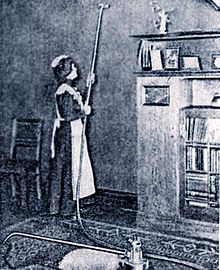
The cleaning ladies are here. Which means I can't really think because they're being generally awesome and vacuuming my lair.

No matter, we will press ahead and see how this post turns out, right? Steady on your horses, friends, there's unknown territory ahead. 


I am having an issue (God, that vacuum is reeeeeally loud, I think it's got a Lego loaf or my kid's Millennium Falcon in its rotors) with perspective and point of view in the book that I have decided to go back to writing. This decision is almost a 180˚ (I'd like to think of it more as a 168.5˚) turn from my previous stance of believing that all my written works must be authentic, real and not fiction. Well, if politicians can lie (the vacuum is right behind me now, the floor is humming and this is hard to write) so can I; I can lie too. 

My former boss, and current friend, Liam Callanan, wrote a book, All Saints, from the point of view as a former teacher (I almost wrote 'former female nun,' now that would've cranked up some editors' eyebrows now wouldn't it've? How many more times can I say 'now' in the same sentence? And 'it've'?? Who talks like that?!) at a beachfront Catholic school. It was a brilliant book and I absolutely loved it. And Liam's a man; always has been. He was never a former female or a nun, so I've got room here, to y'know, do what I want. 

The problem is: the first, oh, 75,000 words all of this book I'm going to get back to very soon (and I'm not saying 'real soon' as if I mean 'oh, y'know after I win the lottery and build my parents a ficus tree terrarium made of sapphires...' 'cause I've already said that) are all written in 3rd person narrative, interrupted at times with 1st person thoughts and observations from the protagonist. I swear I've seen this whole 1st person interruptus done before... where was it? ... Oh, yes, I don't recall never. So, maybe because I've not taken a writing class since college (that was last year, I'm 23 - FIRST LIE! hooyeah, this feels good!) it's not the best technique? But this is the 21st century, baby... it's all good. Recreational use of pot is legal in two states now.

I've got this. 

Not really. 

What I do 'got' is 195 pages of perhaps the wrong perspective. I say 'wrong' because I'm finally OK with writing this book as a mostly fictionalized memoir  (is 'fictionalized memoir' even a genre? Did I just create a new genre? Well... this is the age of do whatever you want) and if I really want to be authentic, I could just crank it out as a book from me about me by me for both of me. What to do... what to do...? I have plans...

I plan to get back to the book within a few days to get a jump on the new year. I'm waiting until 12/12/12 ends so that my efforts won't be a complete waste of time if the Mayans are right about that end of the world thing. Oh, you can joke all you want... but isn't just one teensy bit of you curious if they're right?


I think they're wrong: I have Egg Nog that is good until 12/12/12 (but look at the time stamp... that's hedging it awfully close, don't you think?) next to whole milk which just y'know, GOES for it and doesn't expire until the 17th. That whole milk has cojones; it knows who it is.

This is what the end of the year world year thing does to me. I'm not big on the hype of New Year's resolutions, so I think I'm beating myself to the punch and causing as much angst about the whole thing before I even get started. I need to be like that whole milk: just go for it. 

Readers: what do you think about in terms of reading a book from its point of view? Do you like to hear from "me" or from "him" or "she" or ... "thems"? (Jusssst checking to see if you're still with me.) 

A couple friends have vocally stated they prefer 1st person and I see their point: they feel it's more relatable, more intimate and they get sucked in (like a vacuum). But then there's this part of me that says, 'No, write as a detached observer'; but then I'm nervous that the whole thing I've got going on with my character's thoughts and observations is like a giant vacuum in the room: distracting, loud, fantastical, awesome and hot...


I'm re-reading Life of Pi right now and I find the whole experience -- from the author's notes in the beginning to the entire structure of the book -- to be slightly off-putting in that it's so in-your-face fiction. All of it: I'm caught in that familiar, yet ancient place from "The Wizard of Oz" - where Dorothy wakes up and the child in me believes what she did: that she went on a yellow brick road with a talking lion and living tin man and scare crow to see a floating head, aw c'mon... who am I kidding?; and the adult in me believes what the adults did: that she was smokin' crack. It was Judy Garland... 

But when it first came out, I loved Life of Pi. So the problem is me. I need to stop being such a realist. I love fiction. I think my problem... is guilt. More of that next time. Maybe.  


14 March 2011

Writing Everyday: New Habits Die Easily

by Carrie Bailey

The weekend passed in a blur of drama spent wasting my time with internationals at a backpacker's hotel in Wellington, New Zealand. What a great atmosphere for literary research. I've got accents from every country permanently burnt onto my memory and can now distinguish not simply between countries, but regions within countries. The heightened awareness of sports team rivalries, stereotype related jokes, and myriad of ways with which we all set aside nationality when trying to survive in a foreign land, as well as what we cling to, has been research at it's best. It's an environment filled with distractions...successful ones.

Most shamefully, I forgot I had been challenged to write every day for 28 days here on Peevish Penman last week by a writer from India I met in the same environment. I had taken the weekends off from my ambition and as Monday rolled around, I simply forgot. Yet dawn on Tuesday... I knew there was something missing from the previous day.

The very things that I intend to write about though prove to be the best distractions from writing. During a peculiar conversation with an Irish man who seems to drink more than his weight in lager every night, I was informed that the bar scene was "reality." Probably of interest is the fact that I had only earlier felt compelled to explain to a small English man with an amazing inability to make headway with all the German girls despite the inordinate amount of effort exerted, that in fact socializing in a bar filled with internationals was a break from "reality" and one that can't last forever. From the balcony, I pointed to the building where I attend classes for my Master's program in Information. A single office was lit. Immediately adjacent was where I intended to spend my nights for the remainder of the year, nose to book, fingers to keyboard. Wait, what is "reality?" I couldn't possibly be claiming that...

These quickly forgotten debates and inane discussions through slurred babble have illuminated one aspect of writing that seems normally to teeter on the edge of my awareness; nothing comes as quickly onto the page as what I know. My favorite writers wrote what they knew. Even when all the elements of a story are completely divorced from physics, common sense, and any semblance of this dimension, the parts that bind them into great writing are truths and experience from life and an honest reflection of it.

Even though I lost one day in my 28 day quest, I have more to write about than time to do so. And while I may be slow in developing this habit, the ambition to write everyday has already taught me a valuable lesson about beating writer's block. It doesn't matter if I'm in the office or the backpacker's hotel-wherever I am is my reality and my best source of inspiration. I'll use that knowledge again tomorrow and in three weeks give or take a few days... I'll meet that goal.

(Before I finish this post, I should mention that there a some savvy people around the world who are on to my penchant for conducting "research."  Next time someone asks me about my profession, I intend to say insurance salesperson before the internationals demand character's based directly on their own perfect versions of themselves...again).

Carrie Bailey is an editor for Peevish Penman on the 7th day of a 28 day challenge to write daily. She is studying for her Master's in Information in Wellington, New Zealand.

02 March 2011

How Do You Know When Your Story Is Finished?

by P.J. Kaiser

This question has been weighing on my mind so I thought I'd do a post about it in hopes of getting some input from others. How many times have you written what you think is a complete short story only to have readers comment that you should consider writing a longer piece. This has happened to me a lot and I am never quite sure how to take this feedback. This could, in my mind, mean either ...

Author P. J. Kaiser
The characters and/or setting are so engaging the readers are indicating they'd like to immerse themselves further in this world and get to know the characters even better.

- or -

The ending of the story was utterly unsatisfying to the readers and so by encouraging me to write on, they're actually just begging me to finish the story.

And sometimes it seems to happen so often to me that I wonder if the reader even knows. Or maybe it's even a mixture of both. Bottom line is it has left the reader wanting more. Possibly in the way that once you have a taste of a giant drippy chocolate sundae you want MORE. Or possibly in the way that if you hear a bad song by a band that you like it leaves you wanting MORE because you know it can be better.

All of this has left me wondering how do you know when a story is finished? I decided to do some research and see what some writing experts think about the issue.

K.M. Weiland has this post entitled “What a Mouse Can Teach You About Story Arc.” The post is more geared towards novels, but it seems that stories can and should follow the same idea of having a definite beginning, middle and end. This post emphasizes that in the end of the story, the obstacles presented in the middle need to be overcome and the main character achieves their goal in the end. This can be one formula for success, but in terms of short stories, there are many other ways of handling an ending. At a minimum, we need to consider that a story may have an unhappy ending or might actually have an unresolved ending. Regardless, this definitely presents one potential way of knowing when your story is finished.

Let’s see what Victoria Mixon has to say on the topic. She has this post entitled “Five Ways to Make Your Novel Unforgettable.” She discusses similar ideas in terms of story arc in a more generic way using the concept of “fuses” and the eventual “climax” that wraps up all the loose ends (i.e., fuses), and is both surprising and inevitable.

So, let’s consider what we’ve learned from these two insightful posts. If you’re busily writing along and you’re not sure whether to continue the story or not, then it seems to me that consideration of the story arc and whether you have a recognizable beginning, middle and end is relevant. The exception may be with extremely short flash fiction. In some cases, flash fiction skips the beginning entirely and drops the reader into the middle.

I’ve come up with a list of things to consider about the end of your story to help you determine whether you should, in fact, end your story here or continue:

• Has the ending resolved the obstacles presented in the middle, either happily or unhappily?

• Has your main character achieved their goal that has been plaguing them throughout the story?

• If the ending has been resolved unhappily, do you intend to leave your reader in a state of depression or is there a glimmer of hope to be found somewhere in the resolution?

• Have all the fuses – i.e., loose ends - been resolved? If not, your reader may be left unsatisfied by your ending.

• If you have stopped your story with an unresolved ending, has your reader had enough background to envision what the possible outcomes are? If the reader can envision what would happen with a potential “yes” answer and a potential “no” answer, then leaving it to the reader might be okay, especially in shorter fiction.

So what do you think about my list? Do you agree that these are the right question? Are there other questions or possibilities to consider? Do you think the concept of story arc only applies to novels? If it applies to short stories also, what tweaks, if any, need to be made to the idea? Please share your thoughts on how to figure out if your story is over.


P.J. Kaiser stays at home with her two young children and finds time to write – generally in thirty-second increments. She writes mostly flash fiction and serial stories in a variety of genres. Her work has appeared in anthologies such as “Best of Friday Flash Volume 1,” “50 Stories for Pakistan,”the forthcoming “100 Stories for Queensland,” and, most recently, “Nothing But Flowers: Tales of Post-Apocalyptic Love.” She can usually be found hanging around at her blog “Inspired by Real Life.” P.J. is also the co-moderator of “Tuesday Serial,” a weekly collection of links to the latest installments of some of the web’s best online serials. P.J. lives with her family in Hoboken, New Jersey. Her personal blog can be found at inspired by real life.


23 November 2010

Their First Chapter: Learning From Your Favorite Authors

by Carrie Bailey

Harry Potter and the Sorcerer's Stone: 10th Anniversary Edition (Harry Potter)I just put down Harry Potter and the Sorcerer's Stone having re-read the first chapter to see what mine was missing and I don't mean a boy with a scar. My sister, co-editor for Peevish Penman, had given me valuable feedback about my writing via a text message a few weeks ago, the only difficulty lie in the fact that I had no idea what she was talking about. Descriptions is what she said, and also comparisons. Secretly, my hope that I had arrived, that my first novel was nearly ready, had been crushed like a holiday nut by those 150 characters.

Just a few pages reminded me why Rowling's first book had changed the world and mine wasn't even ready to share with friends (family can't leave you even if they're embarrassed by your writing-hence, why my sister had the first look at my work).

  • Rowling's narrator had temporarily adopted a minor character's point of view
  • She had woven detail about the world into almost every paragraph.
  • She had taken risks going so far as to describe the character Hagrid's feet as baby dolphins.  
I asked myself why I had not included much description in the world and my answer was that I had been told to start with action and remove all extraneous material that did not advance the plot. I obeyed. What I did not consider was whether or not the advice applied to my work.

Many months ago, I had sent the first five paragraphs to the Evil Editor and eleven random strangers suggested ten different directions. I tried to go in all. Had I listened to the Evil Editor who suggested merely switching paragraph two and three, I would not have eliminated the extraneous detail from my entire manuscript only to add it in later.

My aspiring writer lesson: Not all writing advice applies to all writers all the time.

In my pursuit of understanding why we worship certain authors, and decoding my sister's text, I download and listened to "Wee Free Men" by Terry Prachett, the book and the author who had renewed my passion for reading a few years ago. His book, too, had a few features mine lacked:
    The Wee Free Men (Discworld)
  • His character spent significant time in their own thoughts, opinions, and memories
  • Not a single character was pleasant and they were all unapologetic about it.
Why had I shied away from writing any opinions, unpopular or otherwise nasty? Again, I had taken that one piece of advice to focus on action too far and avoided allowing any meaningful insight into the character's thought processes.

Lord of the Rings, The: The Fellowship of the RingBecause I was writing a YA Fantasy, I then turned to the master, J.R.R. Tolkien's "Fellowship of the Rings." If you are going to discover what entertains the most people and endures in their hearts for all time, he would be the author to reveal it. But most remarkable about each of the three authors I studied and dissected was that neither their wording nor their knowledge, or anything about their first chapters seemed extraordinary. Tolkien even less so than Rowling or Pratchett. Was that their genius? I flipped the pages. Was it??? What was it??? It's not just clever marketing. It had to be in their somewhere...

I decided the special secret ingredient that my favorite authors possessed was storytelling. My book lacked that quality. I was so eager to produce a work correctly that I allowed the magical element which makes readers of every age feel captivated by a story for hours, forgetting the feel of the rough library carpet, drifting off to sleep already having been transported to another world, to be an afterthought.

As a painter, I know that too much instruction and adherence to the rules and the formulas and the techniques, and obsessing over proper brush maintenance, drives the muse away... But I did not have writer's block. I had lost sight of the art form. Instead of a mural of a forest, I was painting a fence. Flat paint. Up and down. A fence.


My other aspiring writer lesson: balance technique with creative expression.

Today for the 8th time since last September when I began writing my story for Nanowrimo, I revised my very first chapter. I'm committed to producing a novel worth reading and prepared for the next round of evaluations, but also, I'm ready to be a story teller and not just an English Composition student (which I never was as I studied philosophy in college). But I'm sure my sister will agree when she's subjected to the new revision of my novel's first chapter that finally, this time, this painstaking rewrite has been the one and that I have arrived.

Maybe not, but I did add a few pages worth of detail about the post-apocalyptic world where my characters lived in and added numerous "X is like Y" statements to intensify the depth of the sensory expression. And I learned (again) that hearing feedback and even advice from trusted sources improves my work. So do I regret going too far with the advice I received from the writers on Evil Editor? No, focusing on the action taught me how to create a plot-driven framework for a novel that will make my next book much easier to write.

Just as in painting, mistakes can transform into the most creative, unique, and memorable aspects of your work if handled persistently, I suspect.


20 November 2010

Attack the Ambush

by Bob Mayer

Your patrol is walking along a trail and suddenly you are fired upon from the right. Your fear wants you to jump in the convenient ditch to the left—to avoid the ambush.

However, if the ambush is set up correctly—that ditch is mined and you’ll die if you do that. In life, avoiding problems by running from them doesn’t solve the problem.

Your next fear-driven instinct is to just hit the ground. Stay where you’re at and do nothing. Except you’re in the kill zone and if you stay there, well, you’ll get killed.  We all want to ignore problems.

Because that’s the inherent nature of a problem.  But ignoring your greatest problem will keep you in the kill zone and the result is inevitable.

The third thing you want to do is run forward or back on the trail to get out of the kill zone-- escape.

Except, if the ambush is done right, the heaviest weapons are firing on either end of the kill zone. And you’ll die.  We want to avoid problems by going back to the past or imaging it will get better in the future even if we don’t change anything.

The correct solution is the hardest choice because it requires courage: you must conquer your fear, turn right and assault into the ambushing force. It is the best way to not only survive, but win.  To tackle problems, you must face them.

In my Warrior Writer program, we focus on developing authors.  Most writing programs focus on the writing, but I believe it’s important to focus on the person producing the writing.  And, as Stephen King says:  “I believe fear is at the root of most bad writing.”

Here’s a question every writer has to answer:  “I’ll do whatever it takes to succeed except don’t ask me to do ?????.”

What that one thing is, is the one thing you must do to succeed.

Write what you know—maybe write what you are afraid to know. I see many writers who avoid writing what they should be writing because it would mean confronting their fears. Be curious about your fear—it’s a cave, but instead of a monster inside treasure could be inside.

Remember fear is an emotion. Action can occur even when your emotions are fighting it. Taking action is the key to conquering fear.  Attacking the ambush.

How do you expand your comfort zone by venturing into your courage zone?

Every day try to do something that you dislike doing, but need to do.

If you’re introverted, talk to a stranger every day.

If you’re a practical person, do something intuitive every day.

Do the opposite of your Myers-Briggs character.

Attack the ambush!

http://whodareswinspublishing.com/Warrior_Writer.php

Link to a sample of your writing: http://www.bobmayer.org/

25 June 2010

Writing, Exposure, and Trusting Oneself

by Terra Bundance

I have recently had some deep conversations with Beings, Guides, friends, etc. This week, I have been contemplating the conversations... The theme is one that has been subtle and quiet. One that I really had to dig at, contemplate, question, and listen to... What I realized is that we are all sort of afraid to talk about the same things!

Many people want to be heard and seen. I dare say, ALL people want that. Parents want to be seen be other parents, and by each other... Friends want to be seen by mutual friends of friends, kids want to be seen by their parents, parents by their children, partners want to be seen by each other and their families, employees want to be seen by upper management... the list goes on...

Take a moment and think about how you wish to be seen and by whom. Write one of the names of the people you want to be seen by on a piece of paper. Now, write a list of words next to that person's name. Not words describing how you want to be seen by them, but words to describe how YOU see THAT person. Now sit back and really think about all the words you just wrote down... Now visualize the person's face. Would you actually walk up to that person and tell them all the words you wrote down? Would you be afraid to tell them any of the words? Maybe it is just fear of rejection, but I believe we all hide from what we are feeling because we just want to be seen and heard.

I am choosing now to surrender to how I am willing to allow myself to be seen and heard... My goal for today (and this week) is to ask myself a question. Any time I feel discomfort or frustration, I am going to ask myself, "How am I willing to allow myself to be seen and heard right now?" And see what comes up. I will probably blog about it.

I suggest that as you write your thoughts down and think about the people in your life, you also create a template for future writings. This could help you create a deeper ability to tap into the writer inside. Write about things that make you feel good about you.  Find what makes you feel good about writing. Find what makes you feel good about your life.  This will help you create less of a 'critic' inside, and open you to what the 'writer' inside wants to say.

I feel this is a journey of "trust in self."  Let's do our best to support the journey in each other.

~Terra Bundance

Terra lives in Portand, Oregon, and is a self-proclaimed "stream of consciousness writer."  She and her friend, Stasia, have made a new chocolate bar called "Sweet Surrender," a name emblematic of her current quest for personal growth.

24 June 2010

50 Excellent Writing Activities to Cultivate Your Creativity and Craft

by Jesse Young

Continued from last week...If you’re a good writer, you can succeed in any industry, no matter what kind of online degree you have. But even great writers sometimes have trouble organizing their work, polishing up the details, or even picking a cohesive idea to write about. Here are 50 excellent writing exercises to help cultivate your creativity and craft, from brainstorming to beating writer’s block and remembering your motivation.  

Part 3 of 7: Games

Find a mixture of online, group and individual games that will help you play with words and find inspiration for your stories.
  1. 3 Perspectives: Challenge yourself to look at your topic from three different perspectives: its description, its history and evolution, and how it’s "mapped:" who and what it’s related to.
  2. Link Love Mad Libs: Bloggers should write a post but leave in blanks for links they want to share. Then they can fill them in so that the anchor text is the name of the partner blog. See how this blogger did it.
  3. Write a legacy brick: On a legacy brick, you have limited space to write something important and to the point. Write legacy bricks for different characters or events to practice being concise.
  4. The Opposite Game: Every time you think of an adjective, come up with a creative opposite.
  5. I Have a Secret: Another group activity, this game instructs everyone to write down a secret on a piece of paper, then fold it up and toss it into a container. Mix up all the secrets then take turns picking one out. You’ll end up using someone else’s secret as inspiration for your story.
  6. Electronic poetry: This game is like magnetic poetry on the computer.
  7. Etymologic: Learn about word history and usage here.
  8. Text Twist: This game is sort of like Scrabble and Boggle put together.
  9. Free Rice: This vocab game has a philanthropic twist and can help you get out of your word rut.
  10. Bookworm: Learn definitions of weird words that can add interest to your writing.
next week: Language and Grammar

16 June 2010

Writing is Hard: Part Two

by Milt Reynolds

continued from yesterday when Milt Reynolds decided to use Dr. Wicked's Write-or-Die motivational tool for writers to prepare his post for Peevish Penman...

A Memorable Instance of Writing

I'm trying to think back to when I had a memorable, distinctive, successful instance of writing...

I think it might have been a couple of years back...I'd been studying the Bible and ran across a passage that mentioned exercise. I'm a word nut, and I looked at the Greek meaning of the original word, and it meant gymnastics. That immediately brought to mind my children's experience in their gymnastics class, especially that of my son, Ryan.

Ryan is now grown up, with a family of his own, and I wanted to encourage him to think about priorities in his life, so the ideas I found in my study linked closely with his own experience with gymnastics. I wrote an article in the form of a letter to my children.

I think this experience contains several essential elements of successful writing: R - I - A.

Reading Importance Audience
(At this point I'm distracted...I want to turn these three elements into an acronym. I know it's corny, but I just love acronymns. I was an elementary teacher for many years, and one of the best ways to force myself to understand a complex subject, and then communicate the essentials to my class, was to boil the elements down to just the basics, assign a keyword to each element, and then rearrange the words so that their first letters would form a single related, intriguing word. But Write or Die won't allow me thinking time. There is a Pause button, but I've already pressed it once, and it warned me that it is good for only one pause...it will not allow a second pause. So, I hold down the K key while I think, just to fool the program into letting me think.)

kkkkkkkkkkkkkkkkkkkkkkkkkkkkkkkkkkkkkkkkkkkkkkkkkkkkkkkkkkkkkkkkkkkkkkkkkkkkkkkkkkkkkkkkkkkkkkkkkkkkkkkkkkkkkkkkkkkkkkkkkkkkkkkkkkkkkkkkkkkkkkkkkkkkkkkkkkkkkkkkkkkkkkkkkkkkkkkkkkkkkkkkkkkkkkkkkkkkkkkkkkkkkkkkkkkkkkkkkkkkkkkkkkkkkkkkkkkk

Oops! Write or Die is on to my trick! The screen turns red, warning me that I'm not writing.

Oh well, I don't think it's worth trying to think of an acronym right now...

Reading

The more I read, the more my mind develops interesting thoughts, and the more I want to communicate those ideas with others. At heart, I am more a teacher than a writer. I write to communicate with others, and I want to communicate what I value. Without reading, my mind is not stimulated to question, to wonder, to apply. Without any ideas of value, I lack any desire to communicate with others.

I must be a reader, before I can be a writer.

Importance

The more important an idea, the more compelling the desire the write. Perhaps that's why this post about the art and skill of writing began so weakly...I had little thought of the importance of writing. All I was feeling was a desire to BE a writer, rather that to simply WRITE. But the trick of free association, simply writing as words formed in my mind, regardless of context or syntax, stirred my mind to begin sifting and collating, putting together a mosaic of words, and an important message began to emerge.


Audience

I must have a specific person in mind, or at least a specific group of people or a specific type of person, before I can successfully write. As I write, I envision my audience reacting to it. Is my audience technical or emotional? Is my audience interested in writing? Is my audience sympathetic to the feelings and thoughts of a wannabe writer?

At this point, I have 7 minutes and 18 seconds remaining...I've written 561 words. What have I got?

I've got Three Essentials for Successful Writing:

Be a Reader. Write about things that are important. Envision your audience.
This is what helps me.

What helps you?


17 May 2010

The Chief Silver Eagle Litmus Test for Writers

by Carrie Bailey

Nothing written about First Nation Peoples by white Americans will pass with my father’s approval.  Many of our current elders sympathized with the darker side of the American Indian Movement.  If a writer can accept some of us wouldn’t extend a peace pipe to anyone, then they can write believable First Nation characters fully prepared for the onslaught of disapproval.
   
“The Universal Mary Sue Litmus Test” aids savvy authors to create characters unlikely to trigger nausea in their readers.  Every quality detailed by the Mary Sue test relies on opinion and the writer must accept or reject the spirit of the critique offered on it’s own merit.  When employed correctly and with humor, the writer can avoid the type of character that causes readers to set down their manuscripts.
Here is my Native American version of the Mary Sue Litmus Test:

“The Chief Silver Eagle Litmus Test”

FIRST SECTION: POINTS ADDED (In small doses, none of the below characteristics are absolutely bad or result in a negative stereotype.  Even if your character/s display many of the characteristics in section one, characteristics from the second section will be subtracted from total and may redeem them).


Is your character a modern day FBI e.g. a Full Blooded Indian? (mark 2 points for every yes in this section)

If so, did you base the character on historical records of plains Indians between 1820-1880?

Is his/her use of English impaired by a poor mastery of grammar?
Does he/she give spiritual advice to your other characters?
Does he/she retain perfectly rigid posture at ALL times?
Does he/she claim lineage from an Indian princess?
Does he/she have a traditional name that follows the pattern “COLOR+REVERED ANIMAL” or “GERUND + REVERED ANIMAL?”
Does your character live on a reservation? (mark 1 point for every yes)
Does he/she work at a casino?
Is he/she an alcoholic, drug addict, or chain smoker?
Does he/she promote an environmentalist agenda?
Does he/she sell or make jewelry, art, or other crafts?
Does he/she love fry bread, salmon, corn, tamales, game meat, squash, or other traditional food?
Does he/she have diabetes?
Does he/she tell stories about animals that you wrote yourself?
Did he/she live in a boarding school where he could not speak his native language?
Does he/she play a traditional instrument i.e. the wooden flute?
Does he/she wear any traditional clothes?
Do you describe your character as having remarkably high cheekbones or long hair-especially in braids?
Does he/she use words from his/her language, but speaks English perfectly the rest of the time?
Did they have a full ride to college?
Do they recount with fondness their nights of playing basketball on the rez?
Are they researching their land rights?
Are you drawn to your character’s raw sexual energy?  (ignore this question if you’re writing a romance novel)
Are they between the ages of 15-45, but have no sexual/romantic conflict in a novel where all the other characters in their circle do? 
 Do they dress like a cowboy or listen to country music?
Are they Cherokee, Navaho, Sioux/Lakota, Chippewa, or from any other well-known nation?
 Do they smudge?
 Are they deeply and darkly tormented by being contrary?
 Would you describe them as lazy or disconcerned about the passage of time? (2 points)
Do you personally have a Native American ancestor that you know very little about, but no tribally affiliated friends?  (5 points if you’re White/4 points if you’re Latino/1 point if you’re Asian, Black, or Middle Eastern)
Have you only encountered Indians in Casinos or at Powwows or when you were buying traditional crafts? (1 point)
Did you borrow directly from a character on “Dances with Wolves” or “Smoke Signals” or “Thunderheart” or other 1990s blockbuster? (2 points)
Does your character live in absolute poverty and your compassion for them make you feel good about yourself?  (10 points)
On a standardized intelligence test would your character rate lower than your non-native characters? (10 points)
 Is your character absolutely trustworthy and honest? (2 point)
 Is your character a political activist for Indian rights? (1 point)
Do you have an Indian poster or piece of artwork or craft item in your house though you have no familial ties with the people who created it? (2 points)
Is your character is a mixed blood? (mark 1 point for each of the following)
Does your character walk in two worlds?
Does your character feel consumed by his/her sense of being an outcast, misunderstood, weird, or crazy?
Do the full-bloods all resent your character or envy their features?
 Is your character an urban Indian? (mark 1 point for each of the following)Is he/she currently attempting to find themselves?
 Is he/she spiritually lost?
 Do they attend AA or NA?

SECOND SECTION:  Is your character a full blood AND … (subtract 1 point for every answer in the following section)

 Obsesses over pop culture?
 Loves technology or excels in a technology related field?
 Has a position of authority or power unrelated to his/her ethnic identity?
 Practices a non-First Nation religion?
 Is an instructor of any sport other than hockey, football, baseball, basketball, soccer, or lacrosse?
 Has an accent because they lived outside North or South America or is currently an ex-pat?
 Has a stereotypical middle class suburban lifestyle?
 Has facial hair or light features common to Indians, but often attributed to mixture with Europeans?
 Was adopted and has no desire to reconnect with his/her tribe?
 Is very shallow or materialistic?
 Works in construction, logging, civil engineering or any occupation that aims to develop land or typically uses vast amounts of natural resources?
 Is your character a mixed blood AND … (subtract 5 points)
 Looks like a black American?
 Denies their Latino heritage?
 Denies the fact that they’re ¾ or more white?
 Is part middle-eastern, Jewish, or Asian?
 Is affiliated with a white supremacist group?
 Drives a new car?
 Vacations or studies abroad?
 Is a wine snob, coffee snob, tea snob, or any type of gourmet?
Is an urban Indian AND … (subract 1 point)

Does not rely on any social services?

Lives comfortably in an affluent neighborhood, but does not receive financial support from his/her tribe?

Speaks any native or non-native language fluently?

Did you base your character off of a close friend or relative who has lived on one or more reservations and when that friend reviewed your writing they …

Said “nice” and offered no other feedback? (0 points)

Offered one or more points of constructive criticism? (5 points)

Got excited enough to offer one or more hours of feedback, discuss their culture at length until you fell asleep, asked to promote your work, buy your work, or cried for happiness? (10 points)

Insulted you? (2 points) –trust me on this one

Teased you about it? (5 points)

Are you, the writer, tribally enrolled or have you lived more than two years on a reservation or reserve for non-work, non-social service related reasons?

Do you know why your character's Indian name would include a flying animal rather than a land animal? (1 point)

Is your character spiritually conflicted? (3 points)

Is your character gay/lesbian/transgendered? (2 points)

Is your character a dishonorably discharged military person? (1 point)

Are they more concerned about identifying with a high-school derived subculture such as a goth, jock, emo, drama kid, preppy, punk, skater, geek, etc.? (2 points)

Are they quick witted, humorous, or irreverent?  (3 points)

Could you replace them in your novel with a character of any other ethnic background and not have to spend more than 20 mins editing? (5 points)

The last question tricks us as it can actually go either way. This "The Chief Silver Eagle Litmus Test" should help a few writers avoid the boring dry old literary and real stereotypes of First Nation peoples, Indians, Native Americans, or Amerindians or ...

Like the typical Mary Sue character, Chief Silver Eagle emerges when the best intentions of the writer become too romanticized or sentimental for the average reader's taste.  No one person however, may claim absolute authority to determine an ethnic identity.  Writers benefit from weighing different perspectives of those culturally accepted as members of that community.  I personally desire that the noble savage icon be delegated to fictional groups of people such as the aliens in Avatar.  I plead with you: Do not write another noble savage into literature.  Though many actors survive on these roles, writers have been published based on these, and more than a few have been wildly successful doing so, the effort required to transform the one dimensional stereotype into a multifaceted intriguing character deserves consideration if you want to be published today.  

Few ethnic characters in literature go un-scrutinized, because the politics of identity have significant consequences for members of that group, especially in the case of Native Americans who compose only 0.5% percent of the population in the United States.  As a general rule, do not include a character in your writing from any ethnicity other than your own if that character serves only to promote an ideological agenda.  Just as with any other character, they ought to advance the plot.  Publishers regularly reject manuscripts that unintentionally offend large groups of people.  There should be no shame in being uninformed about another ethnicity especially when they are under-represented in your region, but don't go unpublished for it!   

While the number of people who identify as "Native American" on the American census maybe low, there's no small number of people with native heritage.  Blond or Brown, card-carrying or disbanded, we love to read characters we identify with and allow us to feel connected to our own history, present, and future.  I encourage everyone to include complex Indian characters in their novels.  On that note, I feel there are
Three plot offenses to avoid:              

1.  The outsider who meets the tribe, learns their ways in less than one year, and then takes over leadership with the entire tribes support except one character who resists, but is eventually won over.  Again, please make the tribe alien a la Avatar.  Why is this plot so pervasive?  Many people are enchanted by Indians.  Given the genocide and the negative side of reservation or reserve life, they want to be a character that "saves" the threatened tribe.  But they want it to be easy, too, which is why it happens almost overnight and all the other leaders are quickly dismissed.  But an ethnic group consists of families and families rarely unified so well, especially behind an outsider...    

2.  An ethnography of a native, tribe, nation in place of a plot.  Something must happen in the story.  Even after lengthy research and no matter how exciting your depth of knowledge or experience becomes, just describing the culture bores a reader to tears.  Either write a non-fiction book-we love those, too-or have them do something.  Also, don't have your characters explain their culture to each other as done in Smoke Signals.

3.  The Saga of the Last "Real" Red Man.  Hello?  This plot defies all common sense, but keeps coming back with a new face.  Indians were not only "real" when first met by other cultures and more than those other cultures ceased to be "real" too.  Put down the National Geographic already.  If other ethnic groups, such as Germans, Chinese, Jews, Sami, Basque, etc. continued to have an identity even though some of them adopted other religions, languages, cultural habits, mixed with other groups, and all used different forms of technology no matter where it was invented, then why would Indians stop being "real" when they do?  Keep in mind, we identify as Indian or not because we identify with other Indians or we don't.  Don't believe blood quantum an Indian makes, because the BIA often has brothers and sisters listed with different blood percentages.

If you read this far and you're thinking to yourself that one or more of your favorite Native American characters would be a Chief Silver Eagle, trust me, I know why this is so.  Those famous characters ARE the reason that the stereotypes exist.  You don't have to stop loving them if they mean something to you, but again, you don't have to go unpublished in an attempt to recreate them.  Since the internet reached Indian households information about First Nation peoples has been abundant and it's harder and harder to sell ugly stereotypes, anthropologically correct characters, and fantasy savages.  I don't claim stereotypes or Chief Silver Eagles no longer exist.  I'm just happy to announce they're disappearing in American literature while Indians aren't doing the same in real life.     

*One last idea to avoid: people crossed the land bridge 40,000 or at least 12,000 years ago according to science.  Do you know where all your ancestors were that year?  With the Celts all the way over in Turkey only 2500 years ago, you can avoid making offensive generalized statements if you hold other ethnic groups to the same evaluation.  For example, if Native Americans are actually Asian, then Celts are actually Middle Eastern.  

Before you query an agent, use this test.  Stereotyping isn't an issue of moral character, many Indians believe stereotypes about themselves, too; however, it may be the reason you don't get published.  So, consider using this test to improve an old manuscript that has been rejected and try again.  Good Luck!              
     

17 December 2009

Under The Influcence of Emotion

by Morgan Barnhart


Life has been hitting harder than ever lately. Sometimes it's almost impossible to get my head straight. I used to just sulk in my bed and watch Grey's Anatomy while eating an entire bag of Cheetos.

However, lately when I've been in such a mood, I turn to writing. I focus completely on a totally unrelated story, something to take me away from what I'm currently feeling and to help me clear my head. It works, too. After writing 2,000 words in a straight shot, I fell back into my chair and stared at the computer screen, feeling refreshed and ready to handle any problems that I was currently dealing with.

I find I write the best when I turn to writing while in a depressed state. All of my energy is now directed right into writing instead of down a Cheetos bag.

Try it the next time you're in an unusual mood, whether it be depression, anger, annoyed, etc., Find out if writing while under the influence of a strong emotion helps you write any better than usual. It may be difficult to get started, it may not be, but stick with it, direct that energy towards a greater good.

12 November 2009

Keep Track of Your Characters

by Carrie Bailey

How hard is it to keep track of characters in your NaNoWriMo novel when your fingers are flying over the keypad and word count is the only rule?  Difficult, but not impossible.  You can use a Quick Table to help.  No matter what word software you write with, there are simple tables available.  “Insert” a table into your word document periodically when you add new characters.  Highlight an entire row or column to add more or delete them.

Answer the important questions like who, what, when, where, and why for each character as you go.  Then as you are writing you can go back and add new attributes. These simple tables help you recall where items and even characters are located.

Here’s an example of one for my Nanowrimo novel:


Who

Where

When

What

Why

Indigo

Outside
Melbourne

Chapter One

Suede Jacket,
age 13

Main
Character

Farmer Eldrich

Eldrich Farm

Chapter One

Hunchback

Owns
Indigo’s contract

The General

Town Square

End of
Chapter One

Fat, horse,
light green robes

Buys Indigo’s
contract for his service

Piper

The Manor

Chapter Two

Sandy hair,
freckles

The
General’s charge

The Cook

The Manor

Chapter Two

Scar, former
solider

Loyal
servant


Once you have these tables in place, you'll save time re-reading and never drop a character or forget about a potential plot device.  Your writing will never suffer from inconsistencies.  More than that, with the information visible and organized, you can pound out a few hundred words confident that you haven't missed a beat.

Have I actually used this table?  No, no, this is what organized people do.  I waste hours re-reading and avoid mentioning specific characters and their possessions for pages, because I can't quite recall when or where I wrote about it.  Or, I write another lengthy word document full of lists and random descriptions rather than tables.  You know the kind, the short and dull novel about the novel...yes, I do that.

However, it is a nice table and were I the organized type of person I dream to become, I would use it.  Plus, it only took a minute or two rather than the hours that slip away when I write the novel's companion.