Showing posts with label how to handle criticism. Show all posts

06 May 2013

Crickets and the Muse


By Molly Field

We were told this month to set out to offend someone (anyone) in our posts for the sake of engagement. This is a desperate attempt to get you, someone who's never commented on this blog before, to do the seemingly impossible: tell us what you think.

click here to hear some of your previous comments.

So I'm just going for it; this is totally full of non-sequiturs, so enjoy the ... whatever.


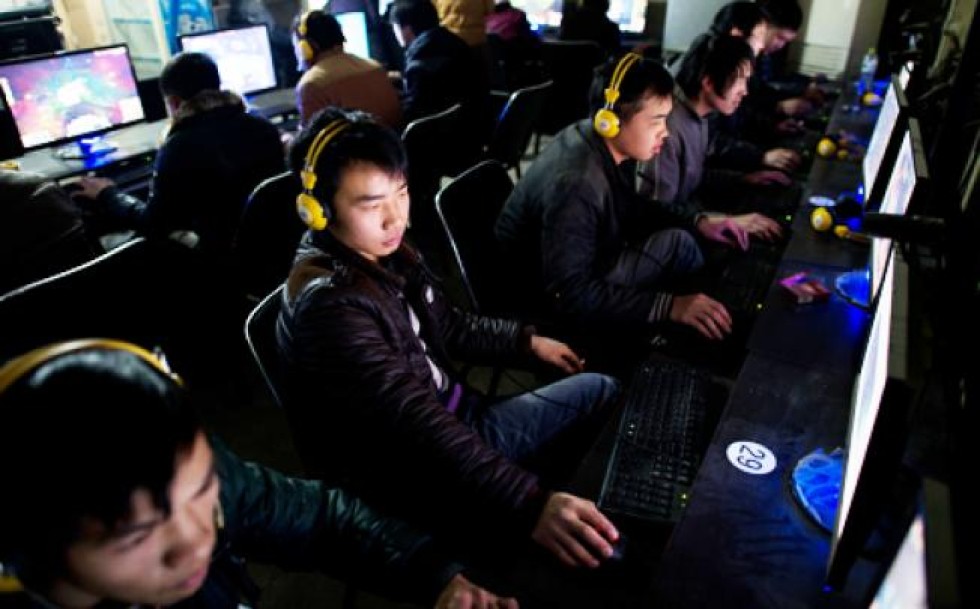
http://www.scmp.com/sites/default/files/styles/980w/public/2013/02/04/comp.jpg?itok=9JXFZ9H3
In an effort to prove to us that you have a pulse, working eyes, hands that can type, and that you're not a Chinese hacker and that you might disagree with anything I might say, I'm going to entice your wrath and write about the most devious of codependencies: how my writing benefits when someone's life is in the crapper.

If it's your life: I need it to stay there so I can write a story based on it without your permission. Because the more you stay asleep to the desperate existence you're hanging onto by a diaphanous thread, the better my content, the richer my dialogue, the tighter my story. The more asleep and blasé you are all the time, the better for sociopaths opportunists creatives like me.

I have someone in my life whom I've decided likes loves to feel sorry for itself. I'm going write in a  gender neutral fashion or ich können sogar auf Deutsch und Sie benutzen das dritte Geschlecht, aber nein, ich will nicht*.

"Lesley's" rants are exhausting. This perforated, yo-yo height, hermaphrodite, Slavic cat dresser friend of mine likes to fixate on the bad, drink too much, dress in charcoal gray, talk about death and sadness, and listen to The Cure, Nickelback, and Laura Branigan songs and also watch John Waters movies in the dark.

It's bad. "Lesley" needs help. And the name is all of it, the quotations included; its parents were new to the country when they adopted it from Illinois.

But I'm so torn!

"Lesley" is my muse for my main character, Chester Feltentooth! S/he's the pro/pre/ant-agonist (emphasis on agony) in my upcoming novel, People Who Should Have Stopped Trying: The Story of Potters in the Rain, out this summer by Too Bad So Sad press, a joint venture imprint of Cosmopolitan Magazine and Penzoil. Illustrations by Charles Addams and "The Family Circus" are blatantly stolen without any regard to copyright laws whatsoever.

Why so venom on poor "Lesley," Molly? Because I'm in a mood.

But I'm also in a tight spot... I mean, if "Lesley" wakes up and changes and improves its life, then where goes my muse? My fodder for my book? My manna for my novel? It's like this: I want "Lesley" to be just bad off enough to continue to live so I can steal its life for my story, but that's it. Any somatic improvement will knock this book off the best-seller's list.

So I tell this person "Lesley," "You need help! You should take better care of yourself!" (While I walk it back into its dark house, inspect its mail for cash, throw away its bills, and guide it back to its cage. As its back is turned, I rest a case of Mad Dog 20/20 with bendy straws on its cage-side table, where I've tactfully replaced its clock and lamp with a carton of unfiltered Lucky Strikes next to my a sad clown Zippo lighter and play Carole King songs on repeat shuffle.)

http://static.tvtropes.org/pmwiki/pub/images/SadClown.jpg

Why? Because I'm a selfish, craven, unimaginative deviant who needs content and my brain is too jacked up on antibiotics from my gonorrhea strep throat, that's why.

I asked our fearless leader Carrie earlier,

"Are you serious about wanting to offend our readers? Because I'm about to let the snarling, scratching, feral, hissing, and rabid backwater cat out of its tattered burlap sack outside a Kinder Care," 

and she said this (after calling her lawyer):

Ultimately, you've got to decide what you want your name on. Don't worry about the site's reputation. If you feel that it would be helpful, write a foreword to the article that serves as a sort of disclaimer to prepare the readers for a change in tone and give it some context. 
How does that sound?  

How does that sound?! I'll tell you. It sounds like a cop out. (Just kidding, Carrie, I love you.)

So to all you mayonnaise chocolate cake eaters in your three-day-old pajamas, by all means: keep it up. I need you to maintain or elevate the lachrymose in your life so that I can finish my book. Hang out more with your toddler-pageant judges and repo friends! But if you suddenly run out of 20/20, call me you do want progress, and you really mean it -- give me the names and addresses of your toddler-pageant judges and repo friends because I need them. But think about the arts first. We need you.

However, change is hard. So if that second hour without a crisis in your life is too much, definitely consider dwelling in the past, do moan over things you can't change, and keep on licking those wounds, because as we all know: no wound gets better unless you fester over it and lick the hell out of it, just ask my coonhound "Gunther," who's now on his fifth round of antibiotics and steroid injections.

And don't even consider trying to write your own book. Only losers write their own books; here's a white zinfandel slushy, give your story to me. Want some pork rinds? Well, I just so happen to have some... right next to the VCR. Do you smoke? Is it me or is it too bright in here?

I can't say this any better than veteran New Yorker cartoonist, Roz Chast in the April 15, 2013, issue:


So... do you have any comments for me? Who's your muse? Want some 20/20?

*I can even go German on you and use the third gender, but no, I won't.


30 April 2013

The Connection Between Bloggers and Their Fans


Over the past month, all the contributors here at Peevish Penman have written about book reviews from every angle imaginable. They’ve discussed the accuracy of them, whether they are credible and whether they are something that writers should be concerned with at all.

Many of them are published authors and have much more personal experience in the area than I do, so I’m deferring to their assessment of the topic. Instead, I thought I would take this time to write about what I am more familiar with, which are the comments left on my writing, both on the blog itself and through my social media connections.

As I’ve gained more readers, I’ve also seen an increase in comments left. It’s an interesting dynamic sometimes, as I allow for anonymous comments to be left on my blog.  I’ve found that people tend to be far more bold with what they say when they are able to hide their identity. Sometimes this makes them more crass, more offensive, more obnoxious. As the blog owner I reserve the right to refuse to publish those comments that cross a line, particularly if left anonymously. I refuse to allow my site to be used as a platform for people to declare hatred, bigotry, or display any other unpalatable opinions.

Though allowing anonymous comments comes with it’s drawbacks, I’ve found many times that anonymous comments tend to be more honest, probably because of the secret nature of them. On Blogger, anonymous comments are truly anonymous, and there is no connection to any profiles or any way for me to ever know who left them. This secretive nature may encourage people to be more critical of my writing, or of the topics I write about, because there is no fear of the message being connected to them.

As a writer, I appreciate the honesty.

The comment universe on Facebook and Twitter is very different than what occurs on the blog itself primarily because of the fact that every comment is attached to the user’s profile and it is visible to anyone who uses those platforms. While that attachment certainly tempers the comments left by many people, there are always a few who say what they want regardless of the connection to them.

On my Facebook page, I very specifically say that I welcome all opinions and commentary, so long as people can remain respectful towards me and towards my other fans. For the most part, this request of respect works. I have only had to ban one fan for being disrespectful in over four years of page administration. (off to knock on wood now...)

The discussions on Facebook often take unexpected turns, usually based on someone misinterpreting something someone else says, or their personal experience altering their impression of what I write. I have been blamed for what other people have commented on my writing before, as though I have any control over how they process it.

The consequences of the comments on my writing on Facebook have been big ones for me personally at times. I’ve had friends get into arguments with one another. I’ve had friends and family get angry with me. I’ve had passionate debates with complete strangers. I’ve thought about giving it all up more than once.

What keeps me going is the connections I make with my readers, my fans.

The nature of any form of online self-publishing, blogging included, is that it allows me to have an immediate connection with my readers. Consequently, they can give me feedback on every single thing I ever write, for better or worse, in real time. There’s no time lag. There’s no editorial process to wait through. There’s not a long period of time between pushing the publish button and knowing what people think. If they love it, I know right away. If they hate it, I know that right away too.

The immediate nature of Facebook, the impulsiveness with which people comment and post, tells me more often than not that they are being honest. Their first impression is the one they give. The anonymous comments left on my blog, often even more honest, even if brutally so at times.

As writers, we want to be relevant. We want to make connections with our readers. We want to know that people read what we write, that they care enough to tell us what they think. We want them to be honest with us, to be critical of what we say and how we say it, and then we want them to come back for more.

I’m happy to write in a medium that lets that all happen almost always openly, almost always honestly and almost always immediately.

28 April 2013

Opening up to criticism

by Clark Brooks

I get critics. I understand them. I appreciate that they have an important role to play. People are busy, money and time are scarce. Recommendations, pro or con, can be invaluable to readers. I also know there's a very fine line between critics and trolls, especially now when anybody with an internet connection can cast themselves as a person of influence. This little tidbit from an interview Prince did with Rolling Stone way back in 1985 has always stuck with me...

"One time early in my career, I got into a fight with a New York writer, this real skinny cat, a real sidewinder. He said, 'I'll tell you a secret, Prince. Writers write for other writers, and a lot of time it's more fun to be nasty.' I just looked at him. But when I really thought about it and put myself in his shoes, I realized that's what he had to do. I could see his point. They can do whatever they want." 


My first book isn't published yet so I haven't had a real personal stake in the review process yet. I'm not looking forward to it either. Not because I have thin skin and I dread the idea of people I don't know judging me and saying mean things about my work (that doesn't mean that I'm rough, tough and immune to that kind of thing; I have skin like toilet tissue and I'm already planning on spending a great deal of time in the fetal position in a darkened room once the critics finally get hold of the stupid thing) but because it's one of those things that's part of the deal and everybody has to go through it. I hate that kind of crap, especially the politics of it. All that stuff that isn't actual writing but necessary components of the writing "biz" seem so time consuming and counter-productive in that it has nothing to do with The Creative Process (I put that in caps in case it wasn't clear that I'm an artiste who is in love with the smell of his own farts). All the business parts of this business bore, confuse, frustrate and/or intimidate me. I know I have to sit down and grow up soon, though. A big part of that is embracing critics and reviews. That means taking time to really figure out all the nuances of Good Reads and Amazon and make connections with people whose reviews could be beneficial to me. All of that is going to be time not spent writing and creating product. "Tough luck, Suzie", you're saying (which isn't very nice and you haven't even read my book yet). "It's something every author goes through. Put on a helmet and shut up." And of course, you're right.

That doesn't mean I'm looking forward to it, though.

17 April 2013

"Poltergeist" and Online (Book) Reviews


By Molly Field

Note: I wrote this post Sunday night, when all was mostly well and Boston was preparing for its marathon. I considered pulling this post entirely in light of the tragedy, but I didn't. I didn't edit it, I didn't change it a bit. Part of me wants to remember what Sunday was like before Monday became horrible. My heart goes out to Boston and all who are affected by it near and far. 

Maybe I'll change my mind in a year or two, but I believe 5-stars are the new 3-stars. Sort of like how 40 is the new 30 25.

When I first started this blogging-to-be-a-writer gig, I was dewy and not unlike Carole-Anne when she fell through the ceiling in "Poltergiest," the first time, all lush and covered in strawberry preserves and completely unaware for what was coming my way or how the hell I'd just gotten there.

I mean, look at her... I'll wait.


image: (c) MGM Studios

I know, right? JoBeth Williams too; all slimy and ready to be smeared into a sandwich. Ready to be devoured by the Internets and judged and critiqued and not at all ready for the intensity of the drive to compete and self-promote and cross-promote and sell and promote ... myself. Something that I wasn't even charging anyone to enjoy or debase.

Then came along the Facebook blog/fan page; a so-called Must Have. It has done nothing but confuse me. Then I got to know other bloggers and I built alliances with people I didn't really "know" and became just more confused:

image: (c) MGM Studios
How'd they get there like that? How'd I get there like that? All I did was open a Facebook account in 2008 and then started a blog for grins and giggles only to end up BEGGING for Likes of a fan page that sucked more of my life away.

How'd I get from someone who just wanted to write about my observations from my cheap seats to hone my writerly skills to a gut-wrenching search for relevance? How?

Here's how: Comments. The comments felt like a kissing cousin of reviews which are only realized through constant self-promotion. I have a modest minuscule blog with a lovely following that I am grateful to have. I have no ambitions of unseating The Bloggess or anyone else, but as humans, we are all looking for favorable consideration. And that universal, human need for "favorable consideration" can eventually resemble biased and loaded boardroom backscratching book reviews.

really??

image (c) www.fourthgradenothing.com
The yearning for unbiased comments and authentic traffic (not China-based bots selling counterfeit Louis Vuitton bags) and the tiresome skulduggery (promoting, sharing, linking, tweeting) behavior has put into harsh relief an ugly fear: maybe objective reviews don't exist.

My thoughts are my own; my craft is writing, but despite all of this, I have been pulled into a direction which makes me uneasy and brings me back to feeling like strawberry preserves -covered Carole-Anne: confused. Social media has availed me to witnessing the unfortunate phenomenon of outright requests for favorable reviews of self-published books. I've heard tell of authors ranting over objective less-than 5-star reviews. I get where that comes from, because books are like our babies, but not every baby places first in the toddler pageant, and some judges won't be bribed.

I don't at all like being pulled in that direction. It feels forced.

image (c) MGM Studios

Neither does Carole-Anne. This was just before her second trip to the afterlife, this time through a giant flaming hole in the wall. 

My take on any book review is this: it has to be truly amazing for me to give 5 stars; we're talking Faulkner or (see, it's all subjective) say, The Bell Jar, which I read in one night and loved with my teeth; or as compelling as any previous NYTBSA (New York Times Best Selling Author) and even then, eeeeeeven then, you're never guaranteed of its quality, says my publishing rep.  I love Nick Sparks, but do I give him 5 stars? I give him 4; he doesn't make me swoon. Maybe I'm a Classic-ist. Nope. I'm just a good writer-ist; I want someone who will tactfully push the envelope.

I can't believe I'm saying this, but I don't know who to trust anymore without Oprah's Book Club. Even the almighty Oprah got burned with James Frey's A Million Little Pieces -- that was just a simple matter of genre, he should have never marketed that book as nonfiction autobiography. Just do what everyone else is doing: "creative nonfiction," but I digress.

I do read reviews now when I go to Amazon for a book, but I didn't used to. I've become a skeptic: I also check the dates for most of the 5-star reviews and am grossed out. Say there's 35 5-star brand-new reviews. Of those 35, 27 are written within three days of release, and some of them are reciprocal. Some are completely over the top IN ALL CAPS I COULDN'T PUT IT DOWN I ABSOLUTELY LOVE THIS BOOK!

Then I like to see what the lower reviews have to say. Sometimes it's totally subjective, "I didn't like the font," or "Not all southerners say y'all." Or "I don't like romance novels, and so I shouldn't have bought this one, but my best friend's cousin wrote it..." Others are really intense: "Georgia bullfrogs don't make calls like that and they definitely don't during the daytime, at least where I live; also, you can't catch a 6-lb rainbow trout in that lake, the limit is 5.5-lbs!!! This author clearly doesn't know what he's talking about," or those reviews written by people with the moniker: "I Will Waste You." Some lower reviews say what I look for: formatting's a mess, dialogue didn't synch up or transitions were weak or nonexistent.  

The proliferation of self-published eBooks bothers me: the quality control is weak. They're like Fan Pages: there are a ton of them and quantity doesn't at all correlate with quality. When it comes to ebooks, quality of the actual product (editing, formatting, etc.) matters to me so much because it's a massive distraction when it stinks. I have stopped reading books when the formatting is wonky or "it's" or "they're" or their ilk are consistently and incorrectly used and/or I get tripped up in the formatting. Don't make me edit this... I was asked once by an eFriend to read an eBook already released, and within the first 11 pages, I experienced about 30 errors and then I started to keep track. I stopped at page 21 when I hit 150 simple errors, including tense and plurality and possession disagreements, bad punctuation, broken sentences, homophones, weird formatting and direct object confusion. I gave up.

Do we have to go through 3rd grade grammar again? YES. I gave those books: 2 stars just for making me wade through their garbage; I felt like this:

image (c) MGM Studios
I couldn't believe I was having to tolerate it. But I will always give more than one star because writing a book is hard. I give mostly 3-star to 4-star reviews if I give one at all.

I wish to give or receive a 5-star review if the book truly moved readers, or if we missed the characters when it ended. I've actually said, "NO!" when a book ended (Kate Chopin's The Awakening). If I learned something about myself, if I highlighted amazing prose or use of language, then I will give it 5-stars. If the artwork captivates me, then I will give it high marks. If it is: mostly flawless and gripping, I will give it 5-stars.

Maybe that's why I'll never publish a book: because I can't play the game and I don't want to waste your time. I'm in this gig to get better at it. I think Anita Diamant hit it so far out of the park with The Red Tent, her stunning debut, that she hasn't replicated it since. "She peaked early," said a good friend of mine. I've become so paranoid about loaded reviews that I'll read reviews in newspapers and then read what people say online before buying.

Last week, I learned that Amazon bought Goodreads. Oh. Dear. Now what? Is this the end of the fair review and awesome reader community? I mean, bully for the Goodreads founders, but many people, including this writer for Salon beg to differ. I can't say I'm surprised. I feel like Goodreads just couldn't resist this:

image (c) MGM Studios

So are they still out there? Do fair, unbiased, unforced reviews exist anymore? What do you think? Do you feel like JoBeth Williams with that skeleton at times?


11 April 2013

The Immortal Online Book Review


Sometimes they make you feel like a genius, and sometimes they make you consider giving up your writing career and finding a secluded tribal village where you can hide. If you've ever cursed at a book reviewer through your computer monitor, I have some bad news for you. They may piss you off, but online book reviews aren't going anywhere.

Before TV, before radio, before every modern advertising medium, there was only one way to know what goods and services were best.

What's that guy saying about me?
Word-of-mouth. The great-great-great-grandfather of the Amazon Customer Review.

People asked friends, family, neighbors, and marauders from nearby villages for advice when making purchases and that was how marketing happened until modern media made it easier for merchants to spread their messages.

So here we are in good old 2013 in an overwhelming ocean of media. Even a Hoosier yokel like me can consume an obnoxious amount of marketing messages without ever talking to another person. There's no need for me to seek out another opinion when I can learn everything I need to know about a product from the comfort of my couch.

But I do it. Most of us do it. I'd even bet you've done it.

Anyone who's made a purchase on Amazon has likely ventured into the murky waters of the Customer Reviews section just for a little backup before clicking Add To Cart. It's a behavior that has been ingrained in our hunting and gathering habits for millenia. Our prehistoric ancestors conserved their time and energy by asking for advice on the best places to hunt or find the best vegetation, and now we're trying to conserve time and money by eavesdropping on the opinions of others before buying stuff. And that stuff includes books.

Most books cost money. Reading costs time. To expect someone to commit to investing in your book without doing at least a little research is a bit unrealistic. Readers will ask around, learning if anyone they know has read your stuff. If they get no response, the next logical step is TO THE INTERWEBS! A simple search of your name and "author" or "books" will bring back any website, blog or other internet destination where people are talking about you. Hopefully the chatter is generally positive, which will at least help the buyer like you, and that's a step in the right direction. The real moneymaker comes with a multitude of positive reviews of your writing. When a consumer sees that a sufficient number of other like-minded human beings approve of your work, they're suddenly much more likely to plunk their money down for your life's work.

Prove it, you say? Okay, here are the numbers:
  • 52% of consumers surveyed in the 2012 Local Consumer Review Survey said positive online reviews make them more likely to patronize a local business
  • 72% of consumers said they trust online reviews as much as personal recommendations (and books are ALWAYS being reviewed online)
  • According to recent Weber Shandwick study, shoppers put more value on consumer reviews over expert reviews by a 3 to 1 margin!
Consumers are talking to each other, and they're also listening to each other much more than you may think. Each online book review becomes part of the collective conversation that is creating your image for potential readers. Sure, there are bound to be some rough reviews at times, but it's just part of the marketing machine that's been around since the first Neanderthal panned a cave painting for not showing enough creative thought. 


At least we, as modern writers, are lucky enough to watch those conversations happen in real-time. It gives us the chance to evaluate the opinions and make adjustments where necessary. It also gives us those special moments to revel in our awesomeness when reviewers actually have something nice to say.

You know, like when a blog reader leaves positive comments below an article (cough, cough).

Let's welcome the online book review as a necessary and even (gasp!) helpful part of our growth as writers. We can appreciate the lumps we take as opportunities for evolution, and our reward for this acceptance will be the increasing amount of electronic adulation that is sure to follow.

To our future reviewers, I simply say: take your shots. We welcome them with pride and simply ask that you're just as passionate when we write something you like.

07 April 2013

An Understructured Rant on Book Reviews, Critics, And Why You Should Write Anyway


By Jody Aberdeen


"The Artist makes culture, not the Critic." - David Bowie

In the Acknowledgements section of my debut novel Convergence, I ended up including the following passage: "I hope you enjoy it, and if you don't, well, I'll just write something else".  Admittedly, it was a bit of pre-emptive insecurity on my part, but in a way, it's really the only strategy I have to face one of the worst fears that plagues many authors, especially new ones: a negative review.

Any fan of AMC's The Walking Dead knows that the recent finale was, at best, mixed in terms of audience reception.  I got into a small Twitter debate with one of my fellow Toronto Wordslingers about one of the characters (The Governor) being true to himself versus the viewers wanting the kind of "Wham!" ending that they didn't get. And I found myself being a complete fanboy about the whole thing, which is odd, considering that the advice I usually give writers is to just write your real story, screw everyone else's thoughts about where you take it.  In most cases, I at least give lip service to the writer's discretion of taking a story where their instincts and inspiration take them, but this time, I couldn't get past my own dissatisfaction with the ending as a fan and a viewer.

But that's the thing: how much consideration to a reviewer or a fan are we obliged to give when writing our work?  It's definitely not limited to novel or screen writing, but to any artistic expression, in any medium.

(Then again, it's not like the writers behind The Walking Dead are going to care about what I have to say about it per se).

It's not exactly a new debate, but there are always new writers, so the question remains valid: at what point does a desire for artistic integrity stop you from connecting with your audience?  Do you write for the market or write what you have to say, even if it bucks a trend?

How much credence do we give to people who make it a living to criticize content versus creating it themselves?  I think by the way I phrased the last one, you can tell where I stand on the question.

Opinions are cheap, really, especially when it comes to the arts.  There's little else that bugs me quite like a so-called patron of the arts who himself does not create the content, has not ever been bit by a creative impulse in her life, but who nonetheless can say, with conviction and a measure of credibility, that this book stinks.

If it was just a matter of some random person playing armchair quarterback with an author's labour of love, then it would end at mere irritation, but because of the sheer plethora of books available in 2013 and the ever shuttering windows of time available for people to read them, critics have never had more power to make or break the career of any storyteller, and they are necessary.

That being said, the math just seems really unfair at times.  Maybe it's the newbie in me, but it just plain sucks that I could spend countless years and ungodly amounts of coffee working on a manuscript just to have one bad review in a major paper or blog site destroy my book's success before it starts.  This is especially true when the critiques are almost purely academic: Stephen King notes in On Writing that one critic panned The Green Mile because his lead character and martyr, John Coffey, has the same initials as another famous figure who died for the sins of ordinary people.  "Really, guys?" is how King puts his own reaction to that particular literary critique.

I suppose it's that very same hipsterish impulse that I'm sensitive to, the idea that a new piece of work is crap if seems too much like a comparable mainstream story, or if it's too "derivative", a critique on which I call "bullshit" quite frequently because, to paraphrase Fight Club author Chuck Palahniuk, we're all basically the aggregation of the sum total of ideas and experiences we've consumed in our lives. Great storytelling often involves using those familiar patterns and archetypes that have been done thousands of times before. Originality can only take you so far, but it's a familiar repost of the self-satisfied critic.

I'll end my understructured rant by saying this: every storyteller has the opportunity to connect with the audience.  Audience connection is the only real external concern that an author should have, but the real shiny part about it is that the works with the greatest resonance with people tend to happen when the author is being real with herself and the story she wants to tell.

Greatest recent example I can think of:  Matthew Quick's debut novel, The Silver Linings Playbook.  No, I'm not about to review the book for you in the midst of my anti-reviewer rant (my hypocrisy only goes so far), but I'll say this much: Quick told a story from a position of such authenticity that you can almost smell the barbecue at the Eagles tailgate parties he portrays, and did so in a voice and style that resonated enough with enough people to generate an Oscar-winning screenplay adaptation.  And the film and the book had enough people who nonetheless didn't feel too highly about it, but look how much that mattered in the long run.

Regardless of whether you end up with a movie deal or continue to write in obscurity, the point is this: tell your story, tell it well, and tell it with reckless abandon and deliberate blindness to the eyes and voices outside your creative process.  Create something that makes you feel good, enjoy the feeling of accomplishment when it's done.

And hey, if people don't like it, do what you were going to do anyway, and write something else.